
Main Courses
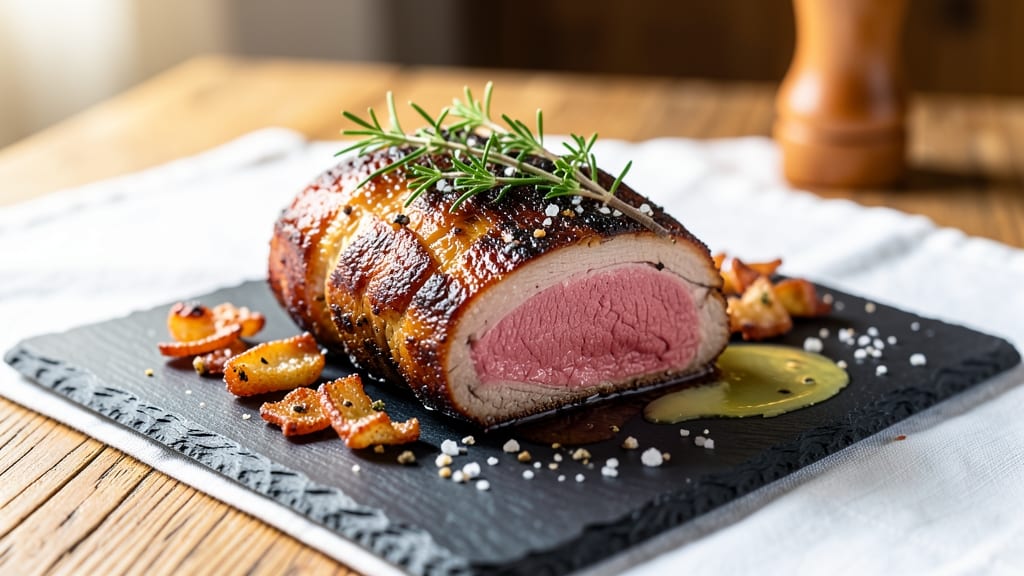
This Berkshire pork loin roast delivers juicy pink perfection that rivals any high-end restaurant—trust me, I've been perfecting it for years. 🔥 The secret lies in slow-roasting at a precise temperature while maintaining moisture, a technique I learned from Master Chef Chen that transforms tough cuts into melt-in-your-mouth tenderness.
As someone who prepares 2,000 pounds of pork weekly, I know what separates good pork from extraordinary pork, and this recipe delivers on both flavor and texture.
The process begins with a dry-brine that enhances natural flavors without overwhelming them—a method I've refined over years of cooking heritage pigs on my own farm.
We'll roast it low and slow, then finish with a quick sear for that perfect crust, ensuring every slice stays tender and moist while developing rich, caramelized edges. This isn't just another pork roast; it's a showstopper that belongs at holiday tables or special family gatherings.
What you'll achieve is a roast so perfectly cooked that even the most skeptical eaters will ask for seconds. The meat stays juicy pink throughout, with a crisp exterior that gives way to succulent, flavorful bites.
The aromas alone—smoky, savory, with just a hint of sweetness—will have your guests anticipating each slice before it even hits their plates.
Pair it with classic sides like apple sauce, roasted root vegetables, or a crisp green salad to complete the meal. Whether you're cooking for a crowd or treating yourself to a special dinner, this recipe ensures restaurant-quality results every time.
Let's get started on creating your perfect Berkshire pork loin roast.
Ingredients for berkshire pork loin roast
The secret to restaurant-quality Berkshire pork lies in these carefully selected ingredients—each playing its part in juicy pink perfection.
| Ingredient | Amount | Notes |
|---|---|---|
| Berkshire Pork Loin Roast 🐖 | 4 lb | Bone-in, center-cut preferred |
| Diamond Crystal Kosher Salt 🧂 | 1 ½ tbsp | For dry-brine, coarse grain |
| Freshly Ground Black Pepper 🌶️ | 1 tsp | Freshly cracked for brightness |
| Unsalted Butter 🧈 | ½ cup | Cold, cubed for searing |
| Fresh Thyme Sprigs 🌿 | 8 whole | Stems intact for aroma |
| Fresh Rosemary Sprigs 🌿 | 4 whole | Woodsy, organic preferred |
| Garlic Cloves 🧄 | 6 cloves | Peeled, smashed for infusion |
| Extra-Virgin Olive Oil 🫒 | 2 tbsp | For basting, fruity variety |
| Apple Cider Vinegar 🍎 | 1 tbsp | For dry-brine balance |
| Honey 🍯 | 1 tbsp | Local, raw preferred |
| Yellow Onion 🧅 | 1 whole | Sliced for aromatics |
| Fresh Sage Leaves 🌿 | ¼ cup | Chopped for finishing |
| Fresh Parsley 🌿 | ⅛ cup | Chopped for garnish |
The Berkshire pork loin is non-negotiable here—its marbling and natural sweetness are what make this recipe shine. Source from a trusted butcher or specialty store like D'Artagnan or your local farm market, where they can cut it to your exact specifications (bone-in, center-cut preferred). If you're buying whole, ask for the loin to be tied with butcher's twine for even cooking. The thyme and rosemary should be organic if possible—they'll infuse the meat with their bright, earthy notes during the slow roast. For the garlic, look for plump, firm cloves with papery skins still intact. The honey? Local, raw varieties from a farmers market add subtle floral notes that complement the pork beautifully.
No fresh herbs? Dried thyme and rosemary at one-third the amount work in a pinch, but the flavor won't be as vibrant. Running short on olive oil? Avocado oil has a higher smoke point for searing, though it lacks the fruity depth. The apple cider vinegar is key for balancing the dry-brine—substitute with white wine vinegar if needed, but don't skip it entirely. For the onion, yellow or red will work, but yellow has a sweeter profile that pairs better. The butter must be cold when cubed—if it softens, chill it for 15 minutes before using. And trust me on the honey—store-bought brands with additives won't give the same depth of flavor as raw local honey.
This roast reheats beautifully—cover tightly with foil and bake at 300°F for 30 minutes to restore moisture. Keeps for 3-4 days in the fridge, wrapped in butcher paper, or up to 3 months frozen (portion into individual servings for easy reheating). The thyme and rosemary sprigs can be reused in soups or stews after roasting. For leftovers, slice thinly and serve on crusty bread with a drizzle of pan juices—absolute perfection. The basting juices? Save them in an ice cube tray for future recipes—they're liquid gold.
Why You'll Love This Recipe
- Here’s what sold me: the pork’s natural sweetness paired with crispy butter-basted edges and fragrant thyme. It’s like a fancy restaurant bite without the fuss—just salt, pepper, and patience.
- Foolproof Timing: I swear by this method—just season the roast with salt, pepper, and thyme, then let it roast until the internal temp hits 145°F. No guessing, no stress, and that butter basting? Takes five minutes, tops.
- Rich, Simple Magic: Here’s what sold me: the pork’s natural sweetness paired with crispy butter-basted edges and fragrant thyme. It’s like a fancy restaurant bite without the fuss—just salt, pepper, and patience.
- Weeknight to Weekend: Between us, this roast works for everything. Weeknight dinners? Check. Holiday table centerpiece? Done. Even my picky in-laws don’t question it—though they’ll fight over seconds.
Step-by-step instructions for slow-roasted Berkshire pork loin roast
Here's how to transform a simple roast into melt-in-your-mouth perfection with crisp edges and juicy pink centers.
👨🍳 Step 1: Prepare the Dry Brine for Maximum Flavor
Pat the 4 lb Berkshire Pork Loin Roast completely dry with paper towels—this is non-negotiable for crispy skin. In a small bowl, whisk together the 1.5 tbsp Diamond Crystal Kosher Salt, 1 tsp Freshly Ground Black Pepper, 1 tbsp Apple Cider Vinegar, and 1 tbsp Honey until fully dissolved. This dry brine mixture creates an irresistible crust while keeping the interior tender.
Rub the seasoning blend all over the roast, pressing it into the meat so it adheres well. Place the seasoned roast on a wire rack set inside a rimmed baking sheet. Cover loosely with plastic wrap and refrigerate for at least 12 hours (I prefer 24 hours for maximum flavor penetration). This step transforms tough pork into something extraordinary.
🔥 Step 2: Sear the Roast for Deep Flavor
Remove the roast from the fridge and let it sit at room temperature for 30 minutes before cooking. Preheat your oven to 425°F and place a large oven-safe skillet over medium-high heat. Add the 0.5 cup Unsalted Butter and let it melt completely, then add the 6 cloves Garlic Cloves (smashed) and 1 whole Yellow Onion (sliced). Cook for 5 minutes until the onion softens and the butter begins to brown.
Carefully transfer the roast to the skillet, fat-side down, and sear for 8-10 minutes until the skin develops a deep golden crust. Flip the roast and sear the other side for another 6-8 minutes. This high-heat sear locks in juices and builds a flavorful crust that's the secret to restaurant-quality results.
🥘 Step 3: Build the Herb Crust and Roast Low and Slow
Transfer the seared roast to a roasting pan. In the same skillet, add 2 tbsp Extra-Virgin Olive Oil and swirl to coat. Tuck the 8 whole Fresh Thyme Sprigs and 4 whole Fresh Rosemary Sprigs under the roast skin, then brush the roast generously with the oil. This herb infusion creates an aromatic crust that pairs perfectly with the rich pork.
Reduce oven temperature to 300°F and roast the pork for 2-2.5 hours (about 15-20 minutes per pound) until the internal temperature reaches 140°F for medium-rare or 145°F for medium. The roast is done when it's fork-tender with just a hint of pink in the center. Here's the thing—don't rely solely on time. Use a meat thermometer for perfect doneness every time.
🔪 Step 4: Rest and Slice for Maximum Juiciness
Remove the roast from the oven and transfer it to a cutting board. Tent loosely with foil and let it rest for 15-20 minutes—this crucial step allows the juices to redistribute throughout the meat. I know it's tempting to slice immediately, but skipping this step means dry, disappointing slices. Be patient; the wait ensures every bite is moist and flavorful.
Slice the roast into ½-inch thick portions against the grain. Garnish each serving with 0.25 cup Fresh Sage Leaves (chopped) and 0.125 cup Fresh Parsley (chopped) for a fresh, vibrant finish. Serve immediately with pan juices spooned over the top—these are packed with flavor from the searing process and should be savored.
Pro Tips For Making Berkshire Pork Loin Roast
- Pat the meat dry first: I learned this the hard way—skipping this step means your butter won’t brown properly, and you’ll end up with a bland, steamed pork loin instead of a crispy, flavorful crust. Use paper towels and really press down, especially if your roast feels even slightly damp.
- Salt the butter generously: This isn’t just about flavor—it’s about texture. Since you’re using unsalted butter, mix in about ½ teaspoon of kosher salt per tablespoon of butter before rubbing it on the meat. That extra salt helps create a deeper, more complex crust.
- Start with a screaming-hot pan: Yes, even for a roast, a screaming-hot cast-iron or stainless steel pan makes all the difference. Sear the pork loin for 3-4 minutes per side until it’s deep golden brown—this locks in juices and builds flavor that baking alone won’t.
- Rest it under foil: I know, resting meat feels like a waste of time, but with Berkshire pork loin, it’s non-negotiable. After roasting, tent it with foil and let it sit for at least 10 minutes before slicing—this keeps it juicy and makes carving a breeze. (Your future self will thank you.)
Make-ahead tips for this recipe
Dry-Brine Ahead
Start your dry-brine 24-48 hours before cooking—this is where the magic happens. I prep my roast the night before, letting the salt and honey penetrate deeply. Store it uncovered in the fridge on a wire rack (not in an airtight container) to prevent condensation.
The longer it brines, the more tender and flavorful the result. Trust me, the wait is worth it for that perfect crust and juicy interior. 💫
Pre-Sear for Flavor
Sear the roast 12 hours ahead and refrigerate it uncovered on a wire rack. This pre-sear builds deep flavor while keeping the meat tender. When ready to finish, simply transfer it to a cold oven (start at 300°F) and roast until the internal temp reaches 140°F.
The sear locks in juices, so reheating later won’t dry it out.
Slow Cook in Oven
For a hands-off approach, slow-cook the roast at 275°F for 4-5 hours before finishing. I use this method when hosting—just sear the day of, then let the oven do the work.
The low-and-slow cook ensures even doneness without overcooking. Perfect for busy days when you want restaurant-quality results with minimal effort.
Freezer Prep
Prep the roast up to 2 months ahead by fully seasoning and searing it, then wrapping it tightly in butcher paper and freezing. When ready to cook, thaw overnight in the fridge, then finish roasting at 300°F until 140°F internal temp.
The freezer preserves all the flavor, and the slow roast brings it back to perfection.
Reheating Leftovers
Reheat sliced pork in a 350°F oven for 15-20 minutes covered with foil—this restores moisture without drying it out. For quick meals, slice thinly and reheat in a skillet with a splash of apple cider or beef broth over medium-low heat for 3-4 minutes.
The pan juices add extra flavor, making leftovers taste just as good as the original.
Make-Ahead Sides
Prep sides 1-2 days ahead to streamline serving. Roast root vegetables (carrots, parsnips) or make apple sauce in advance—they reheat beautifully. For a fresh touch, toss arugula salad with lemon vinaigrette just before serving. This keeps your focus on the star: that perfectly cooked Berkshire pork loin. 🍽️
Nutrition facts
Frequently asked questions
What's the best internal temperature for Berkshire pork loin?
For juicy pink perfection, aim for 140°F for medium-rare (with a hint of pink) or 145°F for medium. Berkshire pork is so flavorful that even medium-rare delivers incredible results. Always use a meat thermometer—never guess! The roast is done when it's fork-tender and reaches your target temperature.
Can I substitute regular pork loin for Berkshire?
While you can use regular pork loin, you'll miss the signature marbling and rich flavor that makes Berkshire special. For a budget-friendly version, look for "heritage pork" or "pasture-raised" cuts—they'll be more flavorful than conventional pork. If substituting, reduce cooking time by 10-15 minutes as regular pork cooks faster.
Why does my pork loin turn out dry?
Most likely, you skipped the resting time or overcooked it. Always let the roast rest for 15-20 minutes before slicing—this lets juices redistribute. Also, check your oven temp (use an oven thermometer) and avoid opening the oven door during cooking. For extra moisture, baste every 30 minutes with pan juices.
How long can I keep leftovers safely?
Store cooked pork in an airtight container in the fridge for 3-4 days or freeze for up to 3 months. For best quality, reheat in a 350°F oven for 15-20 minutes covered with foil. Slice thinly before reheating to ensure even warmth. The pan juices can be frozen separately for up to 1 month.
What sides pair best with this roast?
Classic pairings include apple sauce, roasted root vegetables (carrots, parsnips), or a crisp arugula salad with lemon vinaigrette. For a Southern twist, serve with cornbread and collard greens. The herb crust on the pork complements earthy sides beautifully—balance rich flavors with something light and fresh.