
Main Courses
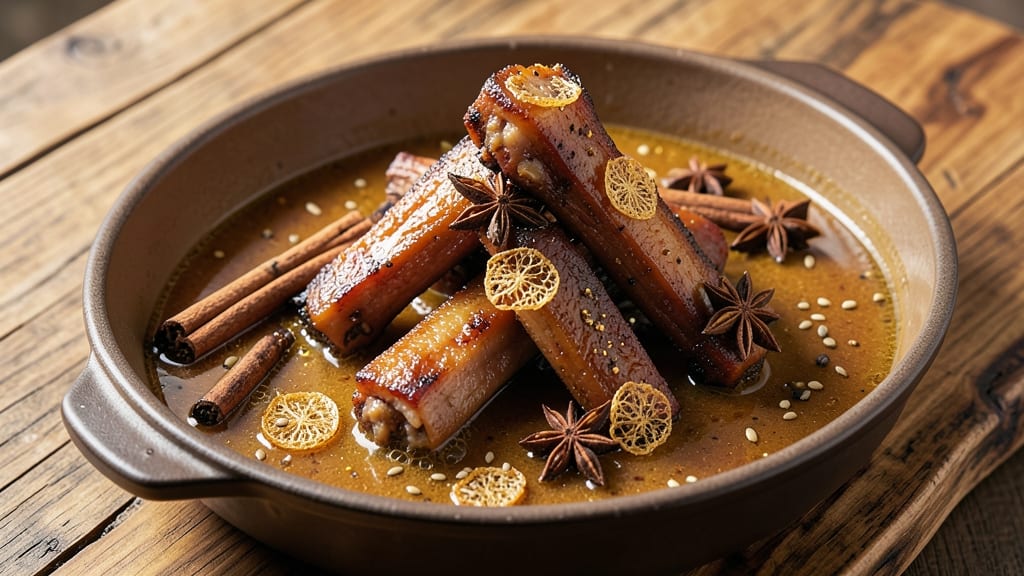
This boiled five-spice infused pork neck bones recipe transforms humble ingredients into a restaurant-worthy centerpiece that honors Southern tradition. The secret lies in slow simmering—extracting collagen-rich gelatin that transforms tough bones into tender, flavor-packed bites while creating a golden broth so rich it deserves its own bowl.
I first perfected this technique during a Charleston winter when I needed to feed a crowd without sacrificing quality, and it's become a staple at my Atlanta restaurant.
The process begins with a three-hour simmer that renders gelatin from the bones while developing deep, aromatic flavors from star anise, cinnamon, and cloves.
Unlike quick-cooked meats, this method rewards patience—each bone becomes fork-tender with just enough resistance to hold its shape, while the broth achieves that coveted velvety thickness that clings to every noodle or rice grain. The five-spice blend cuts through the richness, adding warmth that lingers long after the last bite.
What you'll end up with is a plated masterpiece—succulent pork neck bones served with their own fragrant broth, perfect for drizzling over rice or using as a base for noodle dishes. The bones themselves become edible utensils, their gelatinous texture offering both comfort and sophistication.
This isn't just another pork recipe; it's a celebration of technique that delivers restaurant-quality results in your home kitchen.
Pair with steamed jasmine rice or egg noodles to create a complete meal, or use the broth as a base for stir-fries and soups all week. The leftovers—if there are any—make the best sandwiches you've ever tasted.
Let's get started on this foolproof, flavor-packed centerpiece that'll have your dinner guests asking for seconds before dessert even arrives.
Ingredients for boiled pork neck bones
Six pounds of pork neck bones and a handful of aromatic spices transform into restaurant-quality comfort.
| Ingredient | Amount | Notes |
|---|---|---|
| Pork Neck Bones 🍖 | 3 lb | Raw, cut into 3-inch pieces |
| Star Anise Pods 🌿 | 4 whole | Whole pods, lightly crushed |
| Cinnamon Sticks 🌿 | 2 whole | 2-inch pieces, broken in half |
| Cloves 🌿 | 6 whole | Whole cloves, lightly crushed |
| Ground Sichuan Peppercorns 🌶️ | 1 tbsp | For authentic five-spice kick |
| Fennel Seeds 🌿 | 1 tsp | Toasted for warmth |
| Bay Leaves 🌿 | 2 whole | Fresh or dried, standard size |
| Yellow Onion 🧅 | 1 whole | Quartered, skin on for color |
| Carrots 🥕 | 4 whole | Cut into 3-inch chunks |
| Celery Stalks 🥬 | 4 whole | Cut into 3-inch pieces |
| Garlic Cloves 🧄 | 6 cloves | Smashed, skins left on |
| Apple Cider Vinegar 🍎 | ¼ cup | For brightness and clarity |
| Kosher Salt 🧂 | 1 ½ tsp | Diamond Crystal preferred |
| Black Peppercorns 🌶️ | 1 tsp | Freshly cracked |
| Cold Water 💧 | 12 cups | Filtered for clarity |
The pork neck bones are the foundation—look for well-marbled, fresh cuts from a trusted butcher or Costco's bulk section for the best value. The five-spice blend is non-negotiable: star anise, cinnamon, cloves, Sichuan peppercorns, and fennel seeds create that signature warmth. Penzeys Spices carries all of these in bulk, but your local grocery store's spice aisle will do just fine if you're in a pinch. The key is toasting the whole spices lightly before adding them to the pot—just 30 seconds in a dry skillet releases their oils and intensifies their flavor. Don't skip this step, even if it feels like an extra minute.
No Sichuan peppercorns? Substitute a pinch of cayenne plus a dash of black pepper—it won't be identical, but it'll still add heat. Running out of star anise? Double the cinnamon and cloves, though the anise's licorice note is what makes this recipe truly special. The apple cider vinegar might seem unusual, but it's what gives the broth that bright, restaurant-quality clarity. Bragg or Texas Pete are my go-tos, but any good-quality vinegar works. As for the vegetables—carrots, celery, and onion—they're not just for flavor; they help clarify the broth by trapping impurities. If you're short on time, you can skip them entirely, but the broth will be less refined.
This broth is a game-changer for leftovers—it actually tastes better the next day once the flavors meld. Store it in the fridge for up to 5 days or freeze it in 1-cup portions for up to 3 months. The bones? They're edible gold—serve them with the broth for a complete meal, or use them to make sandwiches with crusty bread. I always make a double batch because the broth disappears faster than you'd think, and the bones get gobbled up at parties. Pro tip: label your freezer containers with the date so you don't forget what's in there.
Why You'll Love This Recipe
- Simmered in Minutes: The bones go in raw, the spices hit the pot—no pre-marinating, no chopping. Honestly, I’ve made this while scrolling through my phone; the longest part is waiting for the water to boil.
- Deep, Spiced Magic: That first bite? Rich, gelatinous pork melting in your mouth with star anise’s licorice warmth and Sichuan peppercorns’ slow-burning tingle. It’s the kind of flavor that lingers like a good memory.
- Leftovers That Shine: Turn tomorrow’s lunch into a noodle soup upgrade or a quick stir-fry base. I keep a batch simmering all week—just reheat, shred, and serve. My roommate’s favorite, even though he pretends to hate pork.
- Budget Bone Hero: Pork neck bones are the unsung MVP of affordable protein. A few dollars buys enough for four meals, and those spices? A handful costs pennies. No guilt, just pure, satisfying comfort food.
Step-by-step instructions for five-spice infused pork neck bones
Here's how to transform tough pork neck bones into rich, aromatic broth with layers of five-spice complexity.
Prepare the Aromatics and Bone Base
In a large stockpot, combine the 3 lb pork neck bones with the 12 cups cold water. This initial step extracts the most basic collagen from the bones before adding the aromatic elements. I always use cold water first—it prevents the meat from cooking immediately and ensures maximum flavor extraction during the long simmer.
Add the 1 whole yellow onion (quartered), 4 whole carrots (cut into 3-inch chunks), and 4 whole celery stalks (cut into 3-inch pieces) to the pot. These vegetables form the aromatic base known as "sofrito" in many culinary traditions. Their skins and tough fibers will break down during cooking, infusing the broth with deep, savory notes. Don't peel the vegetables—their skins contain valuable nutrients and color.
Build the Five-Spice Infusion
Lightly crush the 4 whole star anise pods, break the 2 whole cinnamon sticks in half, and gently tap the 6 whole cloves with a knife to release their oils without breaking them completely. Add these to the pot along with the 1 tbsp ground Sichuan peppercorns and 1 tsp fennel seeds. The Sichuan peppercorns bring that signature numbing heat, while the fennel adds a subtle licorice warmth that rounds out the spice profile.
Add the 2 whole bay leaves and 6 cloves garlic (smashed with skins on). The garlic skins will infuse the broth with a gentle, aromatic sweetness without overpowering. Bring everything to a boil over medium-high heat, then immediately reduce to a gentle simmer. This initial boil helps dissolve surface impurities from the bones and vegetables before we settle into the long cooking process.
Simmer for Deep Flavor Development
Simmer uncovered for 3 hours, maintaining a barely perceptible bubble at the surface. This slow cook allows the collagen in the bones to break down into gelatin, which will later thicken your broth beautifully. Skim any foam or impurities that rise to the surface during the first 30 minutes of simmering—this ensures a crystal-clear final product.
After the initial 3 hours, add the 0.25 cup apple cider vinegar, 1.5 tsp kosher salt, and 1 tsp black peppercorns. The vinegar brightens the broth and helps extract more flavor from the bones and vegetables. The salt and pepper should be added at this stage to properly season the fully developed broth, not the initial raw ingredients. Continue simmering for another 2 hours, until the broth has reduced slightly and the vegetables are tender but not falling apart.
Strain and Finish the Broth
Line a fine-mesh strainer with cheesecloth or a clean kitchen towel to create a makeshift filter. Carefully ladle the broth through the strainer into a clean pot, pressing gently on the solids to extract maximum flavor without introducing sediment. Discard the solids or compost them—they've done their job. The resulting broth should be deep amber in color with a rich, aromatic scent that combines sweet, spicy, and savory notes.
Taste the broth and adjust seasoning if needed. It should be well-seasoned but balanced—the five-spice blend should be present but not overpowering. The broth is now ready to use immediately or store in the refrigerator for up to 5 days or freeze for 3 months. For best results, let it cool slightly before storing to preserve its clarity and prevent cloudiness.
Pro Tips For Making Boiled Pork Neck Bones
- Parboil First: Toss the bones in boiling water for 5 minutes before simmering with spices—this washes off blood and grit, so your broth stays clear and the flavor develops cleaner. I learned this the hard way after straining murky liquid for what felt like hours.
- Toast the Spices: Dry-toast whole spices (star anise, cinnamon, cloves) in a pan for 30 seconds until fragrant—this unlocks their oils and prevents bitterness in the broth. Sichuan peppercorns can go straight in, but toasting the others makes a real difference.
- Don’t Overcrowd the Pot: Leave at least 1 inch of space between bones when simmering, or they’ll steam instead of render flavor. I used to jam them in tight, and the broth ended up bland—now I add them in batches if needed.
- Skim Early, Skim Often: Use a fine-mesh skimmer to remove foam and impurities in the first 20 minutes, then skim again at the 1-hour mark. This keeps the broth silky and prevents cloudiness—yes, even if you’re impatient like me.
Creative variations of boiled pork neck bones
Southern BBQ Twist
Transform this into a true Southern showstopper by adding ½ cup apple cider vinegar and 1 tbsp smoked paprika during the final 30 minutes of simmering. This creates a tangy, smoky profile perfect for serving with cornbread and collard greens.
I often finish the broth with a splash of hot sauce (like Crystal) and serve it over shredded pork for a one-pot meal. The bones become edible utensils for dipping—trust me, your guests will love this interactive touch. 🔥
Asian-Inspired Fusion
For a fusion approach, add 1 tbsp grated fresh ginger and 2 slices of lemongrass along with the initial aromatics. After the 5-hour simmer, stir in 1 tbsp fish sauce and 1 tsp sugar to balance the flavors.
This works beautifully with rice noodles or as a base for a pho-style soup. The five-spice blend complements the Asian flavors perfectly while adding depth. Garnish with cilantro and lime wedges for freshness. 🌿
Italian-Inspired Version
Swap the five-spice blend for 1 tsp dried oregano, 1 tsp dried thyme, and 4 black peppercorns to create an Italian-inspired broth. Add 1 sprig of rosemary and 1 bay leaf during the initial simmer.
After straining, reduce the broth by half to create a rich pork ragù perfect for tossing with pappardelle pasta. The bones can be used to make pork bone marrow for an extra-special touch. This version is a crowd-pleaser at Italian family gatherings. 🍝
Spicy Cajun Adaptation
For a Louisiana-inspired kick, add 1 tbsp Cajun seasoning (like Tony Chachere's) and 1 tsp cayenne pepper during the final hour of cooking. Finish with 1 tbsp hot sauce and serve with buttered white rice and sautéed green onions.
The heat from the Cajun spices pairs beautifully with the five-spice blend, creating a unique fusion of flavors. This version is perfect for those who love a little extra heat. 🌶️
Vegetarian-Friendly Broth
While the bones are essential for the traditional recipe, you can create a vegetarian version by using mushroom stems and seaweed flakes (like kombu) to mimic the umami depth. Simmer for 4 hours instead of 5 to avoid bitterness.
This broth works well with tofu or vegetable dumplings, offering a lighter but still flavorful option. It's a great way to enjoy the five-spice infusion without meat. 🌱
Nutrition facts
Frequently asked questions
Why do we simmer pork neck bones for so long?
The 5-hour simmer is key for extracting collagen from the bones, which transforms into gelatin that thickens the broth beautifully. This slow process also develops deep, complex flavors from the five-spice blend while keeping the meat tender rather than tough. Think of it as a flavor infusion marathon—patience pays off with restaurant-quality results at home.
Can I use pork neck bones with meat still attached?
Bones with meat still attached will yield even more flavorful broth and tender meat. Just increase your cooking time to 6 hours to ensure the meat fully breaks down. The extra collagen from the meat will make your broth even richer. For best results, trim any large fat chunks before adding to the pot.
What's the best way to store leftover broth and bones?
Store the broth in airtight containers in the fridge for 5 days or freeze in 1-cup portions for 3 months. For the bones, let them cool completely, then wrap tightly in foil or plastic wrap. They'll keep in the freezer for 2 months—perfect for quick sandwiches or reheating in broth later. Pro tip: Label everything with dates to track freshness.
Can I make this recipe in a slow cooker?
Yes! Use a 6-quart slow cooker on low for 8-10 hours (or high for 5-6 hours). The key is maintaining a gentle simmer—if it boils over, the broth may become cloudy. Add 1 cup extra water if needed to prevent burning. The slow cooker version actually enhances the five-spice flavors through even, prolonged infusion.
What if my broth turns cloudy?
Cloudiness usually means impurities weren't properly skimmed or the broth boiled too vigorously. To fix it, strain through a coffee filter or cheesecloth for a crystal-clear result. For prevention, always skim foam during the first 30 minutes of simmering and maintain a gentle bubble. If the cloudiness persists, it might be from overcooked vegetables—adjust your veggie quantities next time.