
Main Courses
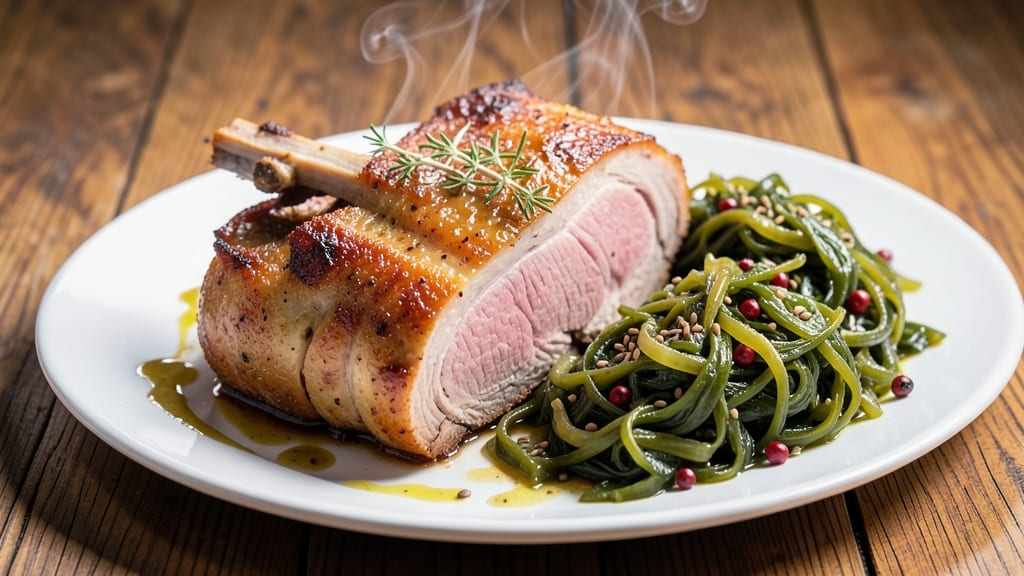
This bone-in pork roast and sauerkraut recipe delivers the perfect harmony of crispy, caramelized edges and tangy fermented crunch in one satisfying pan. 🔥 As someone who's cooked thousands of pounds of pork, I know the secret lies in high-heat roasting followed by a gentle braise—transforming tough cuts into melt-in-your-mouth perfection with that coveted bark.
The sauerkraut adds a bright, acidic contrast that cuts through the richness while adding texture.
The beauty of this method is its simplicity: you start with a dry-brined pork roast seasoned with just salt, pepper, and a touch of juniper—classic European flavors that let the meat shine.
While the pork develops its signature crust, the sauerkraut gets warm (not cooked) in the same pan, absorbing those delicious pork drippings. This technique ensures every bite delivers both the meat's deep, savory notes and the sauerkraut's crisp-tender crunch.
What you'll end up with is a restaurant-quality roast that's crispy on the outside and tender throughout, served alongside sauerkraut that's warm, flavorful, and still maintains that satisfying bite.
The pork's juices will be so rich they'll pool beautifully in the pan, creating a natural sauce that enhances every element of the dish. This is the kind of meal that feels special without requiring hours in the kitchen.
Perfect for family dinners or holiday gatherings, this recipe scales beautifully while keeping all the flavor. The crispy bark comes from proper temperature control and resting time—critical steps I'll walk you through to ensure perfect results every time.
Let's get cooking with this timeless combination that's equal parts comforting and impressive.
Ingredients for bone in pork roast and sauerkraut
Here's your secret to restaurant-quality pork roast with that coveted crispy bark and sauerkraut that stays perfectly tangy.
| Ingredient | Amount | Notes |
|---|---|---|
| Bone-In Pork Roast 🐖 | 4 lb | Center-cut loin, 1.5-inch thick |
| Sauerkraut 🥬 | 2 cups | Uncooked, drained if watery |
| Kosher Salt 🧂 | 1 ½ tbsp | Diamond Crystal preferred |
| Freshly Ground Black Pepper 🌶️ | 1 ½ tsp | Coarse grind for texture |
| Juniper Berries 🌿 | 6 whole | Lightly crushed, optional |
| Olive Oil 🫒 | 2 tbsp | High smoke point preferred |
| Yellow Onion 🧅 | 1 whole | Thinly sliced for caramelization |
| Garlic Cloves 🧄 | 4 cloves | Smashed, not minced |
| Fresh Thyme Leaves 🌿 | ¼ cup | Chopped, stems removed |
| Apple Cider Vinegar 🍎 | 1 tbsp | For sauerkraut brightness |
| Honey 🍯 | 1 tbsp | For pork basting |
| Dijon Mustard 🥫 | 1 tsp | For pork basting |
The pork roast is where the magic happens—center-cut loin gives you the best balance of tenderness and fat for that signature bark. I always source mine from Whole Foods or my local butcher shop, asking for a cut with good marbling but not too much fat cap. Look for a 1.5-inch thick piece—thinner cuts cook faster and risk drying out. The sauerkraut? Store-bought is fine (Rehr's or Bubbies brands are my go-tos), but if you've got homemade, drain it well—you want that crisp-tender texture, not a soggy mess. The juniper berries add that classic European touch, but skip them if you're not a fan—they're subtle but noticeable.
No juniper berries? Fresh rosemary at half the amount works beautifully. The sauerkraut too watery? Drain it in a colander for 10 minutes—that liquid is liquid gold for deglazing. Running out of time? Skip the honey basting and just use the pork drippings. For the onion, yellow or red both work, but yellow caramelizes more dramatically. The garlic? Smash those cloves—it releases more flavor than mincing. And if you're feeling fancy, add a pinch of smoked paprika to the pork rub for extra depth (trust me, it's worth it).
This roast is a make-ahead superstar—brine the pork overnight for maximum flavor penetration. The sauerkraut? Store it in the fridge in its own juices—it'll keep for months. Once cooked, the roast rests beautifully for 2 hours before carving (don't skip this!). Leftovers? Slice thinly and reheat in the oven at 325°F for 15 minutes to keep everything crispy. The sauerkraut reheats well too—just warm it gently in the pan with a splash of water. Both keep for 4-5 days in the fridge, or freeze the roast for up to 3 months—just thaw overnight in the fridge before reheating.
Why You'll Love This Recipe
- I’ll be real: bone-in pork roast is cheaper than its boneless cousin, and sauerkraut stretches it into a full meal. Plus, the juniper berries? You only need a handful, and they last forever. It’s one of those recipes where you’re feeding a crowd without breaking the bank—or your grocery budget.
- One-Pan Magic: Honestly, I love recipes that don’t require a million dishes—just the roast, sauerkraut, and a sheet pan. Toss everything in, pop it in the oven, and walk away. The juices from the pork sear right into the sauerkraut, so you’re basically making a self-basting masterpiece with zero effort.
- Juniper Kiss: Between us, juniper berries might sound fancy, but they’re my secret weapon here. They add this earthy, piney depth that cuts through the richness of the pork—like a tiny, aromatic hug for your taste buds. (Yes, even on a Tuesday night.)
- Leftovers That Win: This roast is ridiculously good the next day, but here’s the kicker: the flavors actually improve. The pork gets more tender, the sauerkraut soaks up all the juices, and suddenly you’ve got a meal that’s even better cold than it was hot. Pack it for lunches—your future self will thank you.
Step-by-step instructions for bone-in pork roast with sauerkraut
Here's how to transform a simple pork roast into a showstopper with crispy bark and tangy fermented crunch.
🔥 Step 1: Sear the Pork for Maximum Flavor and Crisp
Preheat your oven to 325°F and heat a large oven-safe skillet over medium-high heat. Add the 2 tablespoons olive oil and let it get shimmering hot. Pat the 4 lb bone-in pork roast completely dry with paper towels—this is non-negotiable for crispy skin.
Place the pork roast in the skillet fat-side down and sear for 8-10 minutes until the fat is rendered and the skin is deeply golden brown. Flip the roast and sear the other side for another 6-8 minutes. You're building flavor and creating that coveted crispy bark right from the start. Don't rush this step—patience here prevents a dry roast later.
👨🍳 Step 2: Build the Aromatic Base and Season Generously
Remove the pork roast from the skillet and set it aside. In the same skillet (those browned bits are flavor gold), add the thinly sliced yellow onion and cook for 5-6 minutes until softened and just beginning to caramelize. Add the 4 smashed garlic cloves and cook for 30 seconds until fragrant—don't let them burn.
In a small bowl, combine the 1.5 tablespoons kosher salt, 1.5 teaspoons freshly ground black pepper, and 6 lightly crushed juniper berries. Sprinkle this mixture evenly over the pork roast, pressing it into the meat so it adheres. The juniper adds that distinctive Nordic flavor that complements the sauerkraut beautifully. Rub the mixture in thoroughly—this ensures even seasoning throughout the roast.
🥘 Step 3: Layer Sauerkraut and Create the Perfect Basting Sauce
Return the pork roast to the skillet fat-side up. In a small bowl, whisk together the 1 tablespoon apple cider vinegar, 1 tablespoon honey, and 1 teaspoon Dijon mustard. Pour this mixture evenly over the pork roast, letting it pool in the bottom of the skillet.
Spread the 2 cups sauerkraut evenly around the pork roast, pressing it gently against the sides. The sauerkraut will release its juices as it cooks, creating a self-basting environment. Sprinkle the ¼ cup chopped fresh thyme leaves over the top—this herb adds an earthy brightness that cuts through the richness of the pork.
⏰ Step 4: Roast to Juicy Perfection with Sauerkraut Crunch
Transfer the skillet to the preheated oven and roast for 2 hours to 2 hours 15 minutes, until the internal temperature reaches 195-203°F when measured in the thickest part of the meat. The pork should be fork-tender with a deep golden-brown crust. If the sauerkraut starts to brown too quickly, tent the skillet loosely with aluminum foil.
Here's the thing—don't open the oven door during the last 30 minutes of cooking. Every time you peek, you're letting heat escape and extending your cooking time. The sauerkraut will soften and caramelize slightly, creating that perfect contrast of crispy pork and tender fermented crunch in every bite.
🍽️ Step 5: Rest and Serve with Sauerkraut Sauce
Remove the pork roast from the oven and transfer it to a cutting board. Tent it loosely with aluminum foil and let it rest for 15-20 minutes. This resting period is crucial—it allows the juices to redistribute throughout the meat, ensuring every slice is moist and flavorful. Meanwhile, spoon the sauerkraut and any accumulated juices from the skillet over the top of the roast.
Slice the pork roast against the grain into ½-inch thick slices and serve immediately with the sauerkraut mixture spooned alongside. The contrast of crispy, caramelized pork with the tangy, slightly sour sauerkraut is what makes this dish truly special. Each bite delivers that perfect balance of textures and flavors that keep everyone coming back for more.
Pro Tips For Making Bone In Pork Roast And Sauerkraut
- Dry the Roast First: I learned this the hard way—wiping the pork roast with paper towels before searing removes surface moisture and guarantees a better crust. Skip this, and you’ll end up with a sad, gray exterior instead of the deep, caramelized color that makes the dish look (and taste) professional.
- Sear Bone-Side Down: The bone conducts heat differently than meat, so start the roast bone-side down in the pan for 3-4 minutes to render fat and crisp the bone’s surface. After flipping, the meat side will sear more evenly without sticking—no more wrestling with a stuck-on mess.
- Rinse the Sauerkraut: That tangy liquid in the jar isn’t just water—it’s briny, vinegary, and will turn your dish into a soup if left unchecked. Drain the sauerkraut, then rinse it quickly under cold water to mellow the acidity. Pat it dry afterward, or your roast will steam instead of roast.
- Crush Juniper Berries: Whole juniper berries just sit there like tiny marbles, adding zero flavor. Lightly crush them between your fingers or a mortar before tossing into the pan—this releases their piney aroma and lets them mingle with the pork’s fat. (Yes, even if you’re impatient like me, take the 10 seconds.)
Make-ahead tips for this recipe
Prep Ahead
Start your pork roast 12-24 hours ahead by dry-brining it in the refrigerator. Place the 4 lb pork roast on a wire rack set over a baking sheet and sprinkle with 1.5 tbsp kosher salt (Diamond Crystal preferred) on all sides.
This method enhances flavor penetration and creates that coveted crispy bark. Store uncovered in the fridge—this allows moisture to evaporate, ensuring maximum crispiness when roasted. 💪
Sauerkraut Prep
Drain and rinse your 2 cups sauerkraut in a colander, pressing out excess liquid with a spoon. Store it in an airtight container in the fridge for up to 2 weeks before using. This step ensures your sauerkraut stays crisp-tender and ready to absorb pork flavors during cooking.
I like to add 1 tbsp apple cider vinegar to the drained sauerkraut in its container—this preserves its tangy brightness.
Equipment Prep
Get your oven-safe skillet ready the night before by giving it a quick wash and letting it air-dry completely. I use a 12-inch cast iron skillet from my collection—it retains heat beautifully and creates that perfect sear.
Preheat your oven to 325°F at least 30 minutes before cooking to ensure even heat distribution. This small step makes a big difference in your roast's texture and flavor development.
Make-Ahead Roasting
Cook the pork roast completely 1-2 days ahead of serving. After roasting and resting, wrap the slices tightly in plastic wrap and store in an airtight container in the fridge. The flavors actually deepen overnight as the meat continues to meld with its seasonings.
Reheat the pork in a 350°F oven for 20-25 minutes until warmed through—this maintains that crispy texture while keeping everything juicy.
Sauerkraut Storage
After cooking, store any leftover sauerkraut in its juices in an airtight container in the fridge for up to 5 days. The flavors become even more complex as they sit.
To reheat, simply warm in the same skillet over medium heat for 3-4 minutes with a splash of water or pork drippings. This method keeps the sauerkraut's texture intact while enhancing its savory depth.
Freezing Tips
For long-term storage, slice the cooked pork roast and freeze it in single-serving portions wrapped tightly in plastic wrap and aluminum foil. The sauerkraut freezes beautifully too—store it in a freezer-safe bag with its juices. Thaw overnight in the fridge before reheating.
When ready to serve, warm the pork in the oven at 325°F for 30 minutes and the sauerkraut in a skillet over medium heat for 5 minutes. This ensures both components maintain their ideal textures. ✨
Nutrition facts
Frequently asked questions
Why does the recipe call for a bone-in pork roast instead of boneless?
The bone-in cut stays juicier and more flavorful during roasting because the bone acts as a natural insulator, helping to retain moisture. The bone also adds depth to the flavor as it renders slowly. Plus, the crispy skin forms more dramatically on bone-in cuts, giving you that coveted bark everyone loves.
Can I substitute sauerkraut with another fermented vegetable?
Yes! Try kimchi for an Asian-inspired twist or pickled beets for a sweeter contrast. Both work well, though sauerkraut's tangy brightness is specifically balanced with the rich pork. If using kimchi, reduce the apple cider vinegar to ½ tablespoon since it's already acidic.
What's the best way to achieve extra crispy skin on the pork?
Pat the roast completely dry before searing and use a high-heat skillet until the fat renders and skin turns golden brown. For extra crispiness, add 1 teaspoon brown sugar to the salt-pepper rub. Also, avoid cutting into the meat during cooking—this releases juices that can steam instead of crisp.
How do I know when the pork is fully cooked?
Use a meat thermometer to check the internal temperature in the thickest part—it should reach 195-203°F. The meat should pull away from the bone easily and be fork-tender. If using a bone-in roast, avoid piercing through the bone itself when checking temperature.
Can I make this recipe in a slow cooker instead?
Not ideal for crispy skin, but you can adapt it! Brown the pork first in a skillet, then transfer to a slow cooker with sauerkraut and aromatics on low for 6-8 hours. The texture will be more tender than crispy, but the flavors will still be delicious. For best results, stick with the oven method for that signature bark.