
Soups & Stews
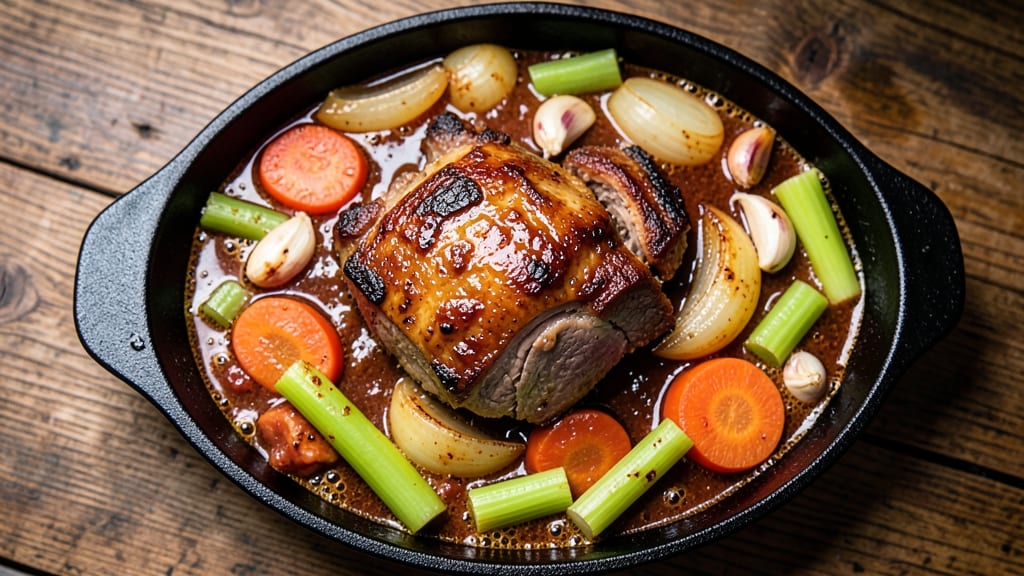
This braised pork stew recipe transforms tough pork shoulder into melt-in-your-mouth perfection through slow, patient cooking—just like my grandmother used to make. The secret lies in searing the meat first to develop deep, caramelized flavors before letting it simmer for hours until the connective tissue dissolves into rich, velvety broth.
I've perfected this technique over years of cooking for crowds at The Smoky Pig, where we process 2,000 pounds of pork weekly.
The process begins with a proper sear in cast iron—my 1890s vintage piece that still holds heat like a dream—followed by deglazing to capture every flavorful browned bit.
Then comes the long, slow braise in aromatic vegetables and herbs, where the pork transforms from tough to tender while absorbing the surrounding flavors. This isn't quick cooking; it's about patience and letting the ingredients work together.
What you'll end up with is a stew that only gets better with time—a deep, complex broth loaded with tender pork that falls apart at the touch of a fork.
The aroma alone will have everyone gathering around your table, and each bite delivers layers of savory, smoky, and slightly sweet flavors that come together perfectly. This is the kind of dish that turns a simple weeknight into a memorable meal.
The beauty of this recipe is its versatility—serve it with crusty bread to soak up every last drop, or pair it with mashed potatoes for a hearty comfort meal.
The flavors develop even more after resting overnight, making it perfect for meal prep or special occasions. Let's get started on creating this restaurant-quality braised pork stew at home.
Ingredients for braised pork stew
The perfect balance of hearty meat, aromatic vegetables, and rich wine for a stew that only gets better over time.
| Ingredient | Amount | Notes |
|---|---|---|
| Pork Shoulder 🥩 | 4 lb | Bone-in for maximum flavor |
| Yellow Onions 🧅 | 2 whole | Cut into 1-inch chunks |
| Carrots 🥕 | 4 whole | Peeled, cut into 2-inch pieces |
| Celery Stalks 🥬 | 4 whole | Cut into 1-inch pieces |
| Garlic Cloves 🧄 | 8 cloves | Smashed, not minced |
| Tomato Paste 🍅 | ½ cup | Squeeze tube preferred |
| Dry Red Wine 🍷 | 1 cup | Bold Cabernet or Merlot |
| Beef Broth 💧 | 4 cups | Low-sodium preferred |
| Fresh Thyme 🌿 | ¼ cup | Leaves only, stems removed |
| Fresh Rosemary 🌿 | ¼ cup | Needles only, chopped |
| Bay Leaves 🍃 | 2 whole | Dried, standard size |
| Olive Oil 🫒 | ½ cup | Extra-virgin for richness |
| Salt 🧂 | 2 tsp | Kosher or sea salt |
| Black Pepper 🌶️ | 1 tsp | Freshly ground preferred |
| Brown Sugar 🍯 | 2 tbsp | Light or dark variety |
The pork shoulder is your star—look for a piece with good marbling and ask the butcher to cut it into 2-inch chunks if it's not pre-cut. Costco or Whole Foods usually carry the best quality. The onions, carrots, and celery form your 'holy trinity'—I always buy organic for these because you're eating them whole. Fresh thyme and rosemary make all the difference here, so grab a small bunch from the grocery store's produce section. If you can't find fresh, dried works at one-third the amount, but it won't have the same depth of flavor. The tomato paste? Trader Joe's has the best squeeze tubes—no waste, and they keep for months.
No red wine? Substitute with extra beef broth plus 1 tbsp balsamic vinegar—it'll still taste amazing. The beef broth should be low-sodium unless you're adding extra salt later. For the herbs, if you're using dried, measure carefully—too much can make the stew bitter. The brown sugar might seem odd, but it balances the acidity from the wine and tomatoes. If you're watching sugar, reduce to 1 tbsp or use a sugar substitute like coconut sugar. The pork can be swapped for beef chuck if you prefer, but the texture and flavor will differ slightly. For a vegetarian version, use hearty mushrooms and lentils instead of pork.
This stew tastes even better the next day—plan ahead! Store in an airtight container in the fridge for up to 5 days, or freeze for 3 months. I always make a double batch because it's perfect for meal prep. The flavors meld beautifully overnight, so if you're serving it at a gathering, let it sit out for an hour before serving. The broth reduces as it sits, so you might want to add a splash of water or broth if it gets too thick. Leftovers reheat beautifully on the stove or in the microwave—just add a little water or broth to loosen it up.
Why You'll Love This Recipe
- Foolproof First Step: I swear by the "sweat the veggies first" trick—onions, carrots, and celery soften in 10 minutes while I chop garlic. No fancy techniques, just a pot, a lid, and letting time do the work.
- Deep Umami Magic: That pork shoulder? It gets tender and infused with caramelized garlic and onions until every bite has this rich, almost smoky depth. Honestly, the longer it braises, the better it gets—no sad, dry meat here.
- Weeknight to Potluck: Same recipe feeds two for dinner or 10 for a gathering. Double the batch, freeze half, and you’ve got a meal ready when life gets busy. My college roommate still asks for this when she visits—no joke.
- Budget That Works: Pork shoulder’s cheap, and this recipe stretches it across multiple meals without tasting like leftovers. Between us, I’ve made it last five days, and the flavor only improves with time. (Yes, even on a Tuesday night.)
Step-by-step instructions for braised pork stew
Here's how to create a rich, tender pork stew that improves with every bite.
Sear the Pork Shoulder for Deep Flavor
Heat the 0.5 cup olive oil in a large Dutch oven over medium-high heat. Once shimmering, place the 4 lb pork shoulder fat-side down and sear for 8-10 minutes until the fat renders and the skin turns deep golden brown. Flip and sear the other side for another 6-8 minutes. This step creates the flavor foundation—don't rush it.
While the pork browns, remove it from the pot and set it aside. You'll notice the oil will start to bubble and the pork will release easily when ready to flip. This crispy crust locks in juices during braising. If the oil smokes too much, reduce heat slightly—you want golden, not blackened.
Build the Aromatic Base
In the same Dutch oven, add the 2 whole yellow onions, 4 whole carrots, 4 whole celery stalks, and 8 cloves garlic cloves. Cook for 8-10 minutes, stirring occasionally, until the vegetables soften and the garlic becomes fragrant. You'll see the onions turn translucent and the carrots begin to caramelize slightly.
Stir in the 0.5 cup tomato paste and cook for another 2 minutes until it darkens slightly. This deepens the sauce color and adds umami richness. The tomato paste will clump at first, but keep stirring until it blends smoothly with the vegetables.
Deglaze and Simmer the Stew
Pour in the 1 cup dry red wine and scrape up all the browned bits from the bottom of the pot with a wooden spoon. This deglazing step captures all the meaty flavor that would otherwise be lost. Let the wine simmer for 3-4 minutes until reduced by half and slightly thickened.
Add the 4 cups beef broth, 2 tbsp brown sugar, 2 tsp salt, 1 tsp black pepper, 0.25 cup fresh thyme, 0.25 cup fresh rosemary, and 2 whole bay leaves. Return the pork shoulder to the pot, fat-side up, and bring everything to a gentle simmer. The liquid should just barely bubble—this prevents the pork from cooking too quickly on the surface.
Braise Until Fork-Tender
Cover the Dutch oven and transfer to a 325°F oven. Braise for 3-4 hours, turning the pork occasionally, until it's fork-tender and easily pulls apart. The stew should reduce slightly, creating a thick, flavorful sauce. I check for doneness by inserting a fork—if it slides in easily with minimal resistance, it's ready.
If the stew reduces too much before the pork is tender, add ½ cup water or broth to maintain moisture. The pork should have a rich mahogany color and the vegetables should be tender but still hold their shape. The longer it braises, the more flavorful it becomes—this is where patience pays off.
Rest and Serve
Remove the pork from the stew and let it rest for 10 minutes before slicing. This resting period allows the juices to redistribute throughout the meat. Skim any excess fat from the surface of the stew if desired, then return the pork to the pot and warm through for another 2-3 minutes. The stew should be thick enough to coat the back of a spoon.
Serve the braised pork stew hot, ladling the rich sauce over each portion. The pork should be tender enough to pull apart with a fork, and the vegetables should be perfectly cooked but still vibrant. The longer it sits, the more the flavors meld together—this is why it tastes even better the next day! Pair with crusty bread to soak up every last bit of that delicious sauce.
Pro Tips For Making Braised Pork Stew
- SEAR THE PORK FIRST: I learned this the hard way—skipping the sear means flavorless braise. Get that pork shoulder screaming hot in a dry pan for 5-6 minutes per side until it’s deep golden. The crust locks in juices and adds richness that no amount of broth can replicate.
- CHOP VEGETABLES UNIFORM: Carrots and celery in random sizes cook at different rates. Cut everything into 1-inch chunks—onions slightly thinner so they soften without disappearing. This keeps your stew cohesive, not a mushy mess with hard bits.
- DEGLAZE WITH BEER OR BROTH: After browning the pork, don’t just splash in water. Use half a cup of dark beer (or extra broth) to scrape up those fond bits—it dissolves into a silky sauce. I skip this shortcut, and the stew tastes flat.
- LOW AND SLOW IS NON-NEGOTIABLE: Crank the heat to medium-high for the first 30 minutes to build flavor, then drop to a bare simmer. If it boils, the pork toughens. Cover and walk away; 2.5–3 hours at 180°F (75°C) turns tough shoulder into melt-in-your-mouth perfection.
Make-ahead tips for braised pork stew
Prep Ahead Like a Pro
I always prep the vegetables the night before—chop the onions, carrots, and celery into uniform chunks and store them in a sealed container in the fridge. This saves 20 minutes of prep time the next day.
The pork shoulder can also be prepped ahead: trim excess fat and cut into 2-inch chunks up to 2 days in advance, then store wrapped in paper towels in the fridge. 🥕
Slow Cooker Shortcut
For a hands-off approach, sear the pork and vegetables as directed, then transfer everything to a 6-quart slow cooker. Add all remaining ingredients and cook on low for 8 hours or high for 5 hours. The slow cooker maintains consistent heat without monitoring, making it perfect for busy days. Just
Freezer-Friendly Magic
This stew freezes beautifully—assemble it completely (including the pork) and freeze in a quart-sized freezer bag or airtight container. When ready to eat, thaw overnight in the fridge, then reheat on the stove over medium-low heat for 15-20 minutes, adding ¼ cup water if needed. The texture remains tender, and the flavors deepen even after freezing. I make two batches and freeze one for lazy weeknights!
Make-Ahead Serving Tips
Let the stew rest for 1-2 hours at room temperature before serving—this allows the flavors to meld even more. Skim excess fat before reheating if you prefer a leaner version.
For presentation, ladle the stew into shallow bowls and garnish with fresh parsley or a sprinkle of crusty breadcrumbs for texture. The longer it sits, the richer the sauce becomes, so don't hesitate to make it a day ahead for gatherings.
Portion Control
Divide the stew into individual quart-sized containers for easy reheating. Each serving contains about 1.5 cups of stew, perfect for a hearty lunch or dinner. Label containers with the date—this helps track freshness.
I often portion out the pork separately and store it in the sauce to maintain moisture. When reheating, add a splash of the reserved sauce to keep everything juicy. 🍽️
Leftovers Reinvented
Transform leftover pork into pork sandwiches with crusty rolls, or shred it for tacos with a side of pickled onions. The vegetables work well in frittatas or grain bowls the next day.
Even the broth can be strained and used as a base for soups or sauces. This recipe truly gives you multiple meals from a single batch—minimal effort, maximum value! 💡
Nutrition facts
Frequently asked questions
Can I use pork chops instead of pork shoulder for this stew?
Pork chops won't work well because they're too lean and cook much faster than pork shoulder. The shoulder's fat and connective tissue are what create the rich, tender texture through braising. If you must use chops, try bone-in, thick-cut pork chops and reduce the cooking time to 1.5-2 hours—but the final result won't be as melt-in-your-mouth tender.
How do I know when the pork is fully tender?
Use the fork test: insert a fork into the thickest part of the pork. If it slides in easily with minimal resistance and the meat pulls apart cleanly, it's done. The pork should also have a rich mahogany color and the internal temperature should reach 203°F—this breaks down the collagen for that fork-tender texture.
What can I do if my stew is too watery after braising?
Simmer the stew uncovered for 10-15 minutes to reduce the liquid, or remove the pork and vegetables, then strain the broth through a fine-mesh sieve. Return the meat and veggies to the pot and reduce the broth separately until it thickens slightly. Stir in 1-2 teaspoons of cornstarch mixed with water if needed for immediate thickening.
Is it better to cook this stew on the stovetop or in the oven?
Both methods work, but the oven gives more consistent, gentle heat that's perfect for breaking down tough meat. For stovetop, simmer uncovered on low heat for 3-4 hours, stirring occasionally. The oven method (at 325°F) is my preferred approach because it maintains even temperature without monitoring.
Can I make this stew in an Instant Pot?
Yes! Sear the pork and vegetables as directed, then add all remaining ingredients to the Instant Pot. Cook on high pressure for 60 minutes, then let the pressure release naturally. The pork will be tender, but the sauce may be thinner than oven-braised. Finish by simmering uncovered on the stovetop for 10 minutes to thicken.