
Soups & Stews
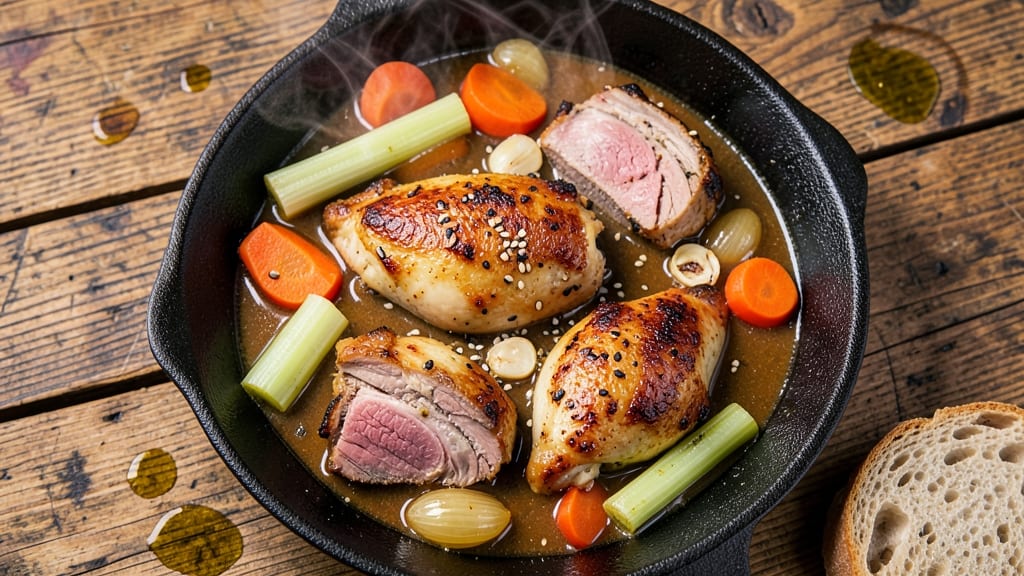
This chicken and pork stew recipe delivers the kind of deep, savory comfort that transforms a simple weeknight into a memorable meal. 🔥 After perfecting it through years of Southern cooking—including my time at The Smoky Pig—I’ve refined it to balance rich flavors with tender textures, using techniques that work whether you’re simmering on the stove or using a pressure cooker for speed.
The foundation starts with proper meat selection: chicken thighs for juiciness and pork shoulder for deep flavor, both browned to develop that essential crust before slow-cooking. A blend of aromatic vegetables—carrots, celery, and onions—builds the stew’s base, while herbs like thyme and bay leaf infuse subtle depth.
The key? Simmering low and slow lets the meat break down into melt-in-your-mouth perfection while the broth thickens into a velvety, flavorful sauce.
What you’ll end up with is a hearty stew where each bite delivers layers of savory, smoky, and slightly sweet notes—ideal for chilly evenings or family gatherings.
The pork becomes fork-tender, the chicken stays juicy, and the vegetables absorb the rich broth, creating a dish that’s both nourishing and deeply satisfying. Serve with crusty bread or buttery rice to soak up every last drop.
This recipe scales effortlessly, making it perfect for feeding a crowd or prepping ahead for meal prep. The techniques here—browning, braising, and balancing acidity with sweetness—are timeless, yet the approach is flexible enough for modern kitchens. Let’s get cooking.
Ingredients for chicken and pork stew
Six hearty ingredients transform into a stew so rich it feels like a hug in a bowl.
| Ingredient | Amount | Notes |
|---|---|---|
| Chicken Thighs, Bone-In 🍗 | 1 ½ lb | Skin-on for flavor, trimmed of excess fat |
| Pork Shoulder, Boneless 🐖 | 2 lb | Cut into 1.5-inch cubes |
| Yellow Onion 🧅 | 1 whole | Cut into 1-inch chunks |
| Carrots 🥕 | 4 medium | Peeled and cut into 1.5-inch pieces |
| Celery Stalks 🧄 | 4 whole | Cut into 1-inch pieces |
| Garlic Cloves 🧄 | 6 cloves | Smashed with side of knife |
| Fresh Thyme 🌿 | ½ oz | Stems removed, leaves stripped |
| Bay Leaves 🌿 | 2 whole | Dried, standard size |
| Tomato Paste 🍅 | ½ cup | Smooth, not chunky |
| Dry Red Wine 🍷 | 1 cup | Bold, like Cabernet Sauvignon |
| Chicken Broth 💧 | 4 cups | Low-sodium preferred |
| Olive Oil 🫒 | 2 tbsp | Extra-virgin for richness |
| Salt 🧂 | 1 ½ tsp | Diamond Crystal preferred |
| Black Peppercorns 🌶️ | 1 tsp | Freshly cracked |
| Brown Sugar 🍯 | 1 tbsp | Light or dark |
The pork shoulder is non-negotiable—Costco or your butcher's counter for the best price per pound. Look for well-marbled cuts, not lean. Chicken thighs? Bone-in, skin-on keeps them juicy, so skip the pre-cut boneless versions. For the vegetables, Trader Joe's has the best pre-cut carrots and celery (saves time), but whole roots work too—just peel and chop. The thyme should smell vibrant, not dusty. Penzeys or bulk bins at Whole Foods are great for quality herbs. Fresh thyme is worth the splurge here—dried just doesn't cut it for depth of flavor.
No red wine? Substitute with beef broth plus 1 tbsp balsamic vinegar—it mimics the acidity. Short on carrots? Swap in parsnips or sweet potatoes for a different twist. The tomato paste can be the squeeze-tube kind from Trader Joe's—no waste, and it keeps for months. Brown sugar? Light or dark both work, but light has a cleaner finish. If you're using a pressure cooker, reduce the broth by 1 cup since it won't evaporate as much. The bay leaves? Two standard dried leaves is perfect—no need to crush them.
This stew tastes even better the next day—double the batch if you can. Store in the fridge for 4-5 days or freeze for 3 months. I portion mine into glass containers so it reheats evenly. For meal prep, freeze half the batch right away—thaw overnight in the fridge before reheating. The pork gets fork-tender after 3-4 hours of simmering, but the chicken stays juicy if you don't overcook it. Always bring it to a simmer, not a boil, after adding the meat back in.
Why You'll Love This Recipe
- One-Pot Magic: I swear by this recipe when I’m too tired to scrub pots—just dump everything in, let it simmer, and walk away. The bone-in chicken thighs and pork shoulder practically melt into rich, flavorful shreds while the carrots and celery soften into the broth like they’ve been cooking all day.
- Deep, Savory Soul: The pork shoulder adds this incredible depth—it’s not just meat, it’s layers. The onions caramelize just enough to sweeten the stew, while the bone-in chicken infuses the broth with a richness that makes every spoonful worth lingering over. (Yes, even on a Tuesday night.)
- Leftovers That Shine: This stew only gets better the next day, and honestly? That’s my favorite kind of meal. The flavors meld overnight, and reheating it is just as easy as the first time—perfect for packing lunches or feeding unexpected guests without stress.
- Budget-Friendly Feast: Using chicken thighs and pork shoulder stretches every dollar, and the veggies (onion, carrots, celery) bulk it up without breaking the bank. I’ve made this for date nights, family dinners, and even a potluck—it’s the kind of dish that feels special but won’t empty your wallet.
Step-by-step instructions for chicken and pork stew
This hearty stew delivers deep, savory flavor through careful layering and slow cooking.
🔥 Step 1: Sear the Meats for Rich Foundation
Heat the 2 tablespoons olive oil in a large Dutch oven over medium-high heat until shimmering. Working in batches, add the 1.5-pound chicken thighs skin-side down and sear for 4-5 minutes until golden brown and crispy. Flip and sear the other side for another 3-4 minutes.
Remove the chicken and set aside. In the same pot, add the 2-pound pork shoulder cubes and sear for 3-4 minutes until browned on all sides. This step builds deep flavor through the Maillard reaction—don't rush it. If needed, work in batches to avoid crowding the pan.
👨🍳 Step 2: Sauté Vegetables and Aromatics
In the same Dutch oven, add the 1-inch yellow onion chunks, 1.5-inch carrot pieces, and 1-inch celery stalks. Cook for 5-6 minutes until softened and slightly caramelized. Stir occasionally to prevent burning.
Add the 6 smashed garlic cloves, 0.5 ounce fresh thyme leaves, and 2 bay leaves. Cook for 1 minute until fragrant—this releases their essential oils and forms the aromatic base. The vegetables should be tender but not mushy, creating a perfect foundation for the stew.
🍳 Step 3: Deglaze and Build the Sauce
Pour in the 1 cup dry red wine and scrape up all the browned bits from the bottom of the pot with a wooden spoon. This deglazing step captures all that meaty flavor. Let it simmer for 3-4 minutes until reduced by half.
Stir in the 0.5 cup tomato paste, 1.5 teaspoons salt, 1 teaspoon black peppercorns, and 1 tablespoon brown sugar. Cook for 2 minutes until the tomato paste darkens slightly and the mixture becomes thick and glossy. This creates a rich, balanced base for the stew.
🥘 Step 4: Simmer Until Tender and Flavorful
Return the seared chicken and pork to the pot. Pour in the 4 cups chicken broth and bring to a gentle boil. Reduce heat to low and cover partially, leaving a slight gap for steam to escape. Simmer for 1 hour 30 minutes to 2 hours until the meats are fork-tender.
Check the liquid level occasionally and add water or broth if needed to keep the stew moist. The pork should pull apart easily, and the chicken should have juicy, tender meat that separates from the bone. The longer it simmers, the deeper the flavors develop.
⏰ Step 5: Rest and Adjust Seasoning
Once the meats are tender, remove the stew from heat and let it rest for 10 minutes covered. This allows the juices to redistribute throughout the stew, ensuring each bite is moist and flavorful.
Taste and adjust seasoning if needed. The stew should be rich, savory, and well-balanced with a touch of sweetness from the brown sugar. Serve hot, garnished with fresh thyme leaves if desired. This comforting stew tastes even better the next day as the flavors continue to meld.
Pro Tips For Making Chicken And Pork Stew
- Sear the Meat First: The difference between a stew that tastes like a pot of water and one that makes your kitchen smell like heaven starts here. Get your Dutch oven screaming hot—we’re talking the kind of heat where smoke starts to think about leaving—then work in batches. Chicken thighs first, skin-side down, until the skin crisps and pulls away like it’s late for a date. Flip and repeat with the pork shoulder. This isn’t just for looks; it’s the flavor foundation. Skip this, and you’ll wonder why your stew tastes like it was assembled in a sad office microwave.
- Cut the Onions Like a Pro: I used to chop onions into sad little half-moons, and my stew always ended up with those annoying, chewy bits that ruin the texture. Instead, slice them into even ¼-inch wedges—think like you’re making a pizza, but with more precision. The larger surface area cooks faster and soaks up flavors better. And for the love of stew, don’t skip the caramelization step. Let those onions turn golden before adding anything else—this is where the depth of flavor hides.
- Don’t Crowd the Pot: I learned this the hard way after a stew that took forever to cook and ended up with watery meat. When you’re browning the meat, give it room to breathe—think of it like a crowded subway car, but for proteins. Overlapping pieces steams instead of sears, and that’s a one-way ticket to bland stew town. Work in batches if you have to, but make sure there’s at least a ½-inch gap between each piece. Your future self will thank you when the meat falls off the bone like it’s been waiting for this moment.
- Deglaze with Something Strong: After searing, I used to just splash in whatever liquid I had lying around—usually water or even worse, straight from the tap. Big mistake. For this stew, grab a splash of dry white wine or apple cider vinegar (about ¼ cup) and let it bubble away for a solid 2 minutes before adding the broth. The acid cuts through the meat’s richness and pulls all those browned bits—aka flavor—off the bottom of the pot. It’s like giving your stew a wake-up call. Skip this, and you’re basically serving a diluted version of what it could be.
Pro cooking tips for perfect results
Meat Selection Matters
For this stew, I swear by bone-in, skin-on chicken thighs—they stay juicy and flavorful, while the pork shoulder delivers that melt-in-your-mouth tenderness. Look for well-marbled pork from your local butcher or Costco—the fat renders down beautifully during cooking.
If you're short on time, swap the pork shoulder for pork butt (it's the same cut, just sold differently). 🐖
Sear Like a Pro
Never skip the searing step—this is where the Maillard reaction creates deep, caramelized flavors. Use a heavy-bottomed Dutch oven (I love my Lodge cast iron) and work in batches to avoid crowding.
The chicken should be golden brown and crispy on both sides, while the pork cubes should develop a rich crust. If your pan isn’t hot enough, the meat will steam instead of sear—wait until it’s smoking hot before adding the meat. 🔥
Deglaze for Maximum Flavor
After searing, don’t just pour in the wine—scrape up every browned bit from the bottom of the pot with a wooden spoon. These fond bits are packed with flavor and form the base of your stew.
Let the wine reduce by half before adding the tomato paste—this concentrates the flavors and creates a rich, glossy sauce. A bold Cabernet Sauvignon works best, but if you don’t have wine, beef broth + 1 tbsp balsamic vinegar is a great substitute. 🍷
Simmer Low and Slow
This isn’t a race—low and slow is the key to tender meat and deep flavor. After adding the broth, reduce the heat to low and let it simmer covered (but slightly ajar) for 1.5 to 2 hours.
The pork should pull apart easily, and the chicken should be juicy, not dry. If the stew gets too thick, add a splash of broth or water—it should coat the back of a spoon but still be rich, not watery. 🥘
Rest Before Serving
Resist the urge to serve immediately—resting for 10 minutes lets the juices redistribute, ensuring every bite is moist and flavorful. This is especially important for the chicken, which can dry out if sliced too soon.
Taste and adjust seasoning after resting—sometimes the stew needs a pinch more salt or a splash of red wine vinegar to brighten the flavors. Garnish with fresh thyme leaves for a pop of color and aroma. ✨
Pressure Cooker Shortcut
For a faster version, use an Instant Pot or pressure cooker. Sear the meats as directed, then add all ingredients and cook on high pressure for 40 minutes.
Release the pressure naturally and let it rest for 10 minutes before serving. The meat will be just as tender, and you’ll save hours of simmering time. Just
Nutrition facts
Frequently asked questions
Can I substitute pork shoulder with another cut?
Yes! For similar results, use pork butt (it's the same cut, just sold differently) or pork ribs. If you prefer leaner meat, pork tenderloin cubes work but will stay firmer—reduce simmering time to 1 hour instead. For extra richness, try pork belly (remove skin before cooking).
How can I make this stew in a slow cooker?
Brown the meats first in a skillet, then transfer everything to your slow cooker. Add all ingredients except broth (use 3 cups instead of 4—less evaporation). Cook on low for 6-7 hours or high for 4 hours. The pork will be even more tender! Stir occasionally and add water if needed to maintain moisture.
Why did my stew turn out too watery?
This usually happens when you don't reduce the wine enough or use too much broth. For future batches, reduce the wine to 1/3 its volume before adding tomato paste, and use 3 cups broth instead of 4. If it's already too thin, simmer uncovered for 10-15 minutes to thicken naturally. For instant thickening, mix 1 tbsp cornstarch with 2 tbsp cold water and stir in.
Can I prepare this stew ahead of time?
This stew tastes even better the next day. Make it 1-2 days ahead and store in the fridge. Reheat gently on the stove over low heat (don't boil) or microwave in 1-minute intervals until hot. For freezing, portion into airtight containers and freeze for up to 3 months. Thaw overnight in the fridge before reheating.
What's the best way to reheat leftovers?
Reheat on the stove over low-medium heat for 5-10 minutes, stirring occasionally, until bubbling. For microwave reheating, cover with a damp paper towel and heat in 1-minute bursts until hot. Never microwave uncovered—it can make the stew watery. Add a splash of broth or water if it seems too thick after reheating.