
Sauces & Condiments
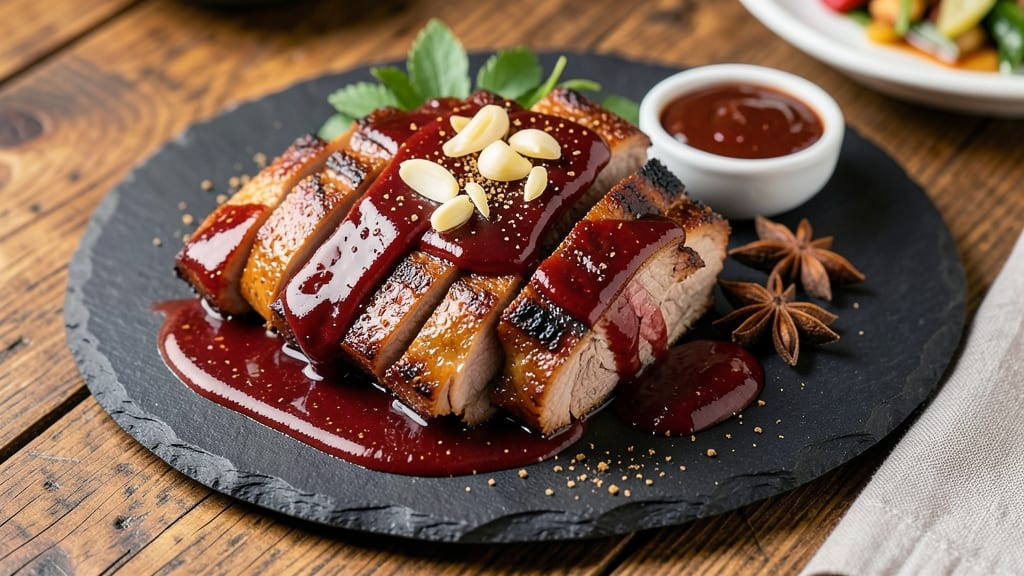
This Chinese BBQ pork red sauce transforms ordinary pork into restaurant-quality centerpiece with its deep, fermented soy-chili harmony. The secret lies in balancing sweet, salty, and spicy notes through slow simmering—creating a glossy, clingy sauce that caramelizes beautifully.
I developed this recipe after years of studying Cantonese BBQ techniques, and it never fails to impress even skeptical eaters.
The foundation starts with fermented soy sauce and hoisin paste, which provide that signature umami depth, while chili bean paste adds controlled heat. Five-spice powder and star anise infuse warmth without overpowering, while a touch of honey creates the perfect sweet-savory balance.
Unlike store-bought versions, this sauce builds complexity through proper reduction—never rushed, always flavorful.
What makes this sauce exceptional is its versatility: brush it over pork belly for crispy, sticky edges or serve it as a dipping sauce for dumplings and spring rolls. The texture becomes luxuriously thick yet still silky when properly reduced, clinging to every bite.
Each batch delivers that authentic BBQ restaurant taste at home, with flavors that deepen the longer it sits.
For best results, let the sauce simmer uncovered until it coats the back of a spoon—a test I always recommend. The aroma alone will transform your kitchen into a Cantonese BBQ joint, while the taste delivers that perfect harmony of sweet, salty, and just enough heat.
Ready in about 45 minutes, this sauce is the game-changer your BBQ repertoire needs.
Ingredients for chinese bbq pork red sauce
Ten essential ingredients blend into Cantonese BBQ magic—fermented depth meets chili heat.
| Ingredient | Amount | Notes |
|---|---|---|
| Fermented Soy Sauce 🍶 | ½ cup | Dark soy preferred for color |
| Hoisin Paste 🍶 | ½ cup | Thick, sweet-savory consistency |
| Chili Bean Paste 🌶️ | 2 tbsp | La Jiao or doubanjiang preferred |
| Five-Spice Powder 🌿 | 1 tsp | Toasted for deeper aroma |
| Star Anise Pods 🌟 | 2 whole | Crushed lightly for infusion |
| Garlic Cloves 🧄 | 6 cloves | Peeled, minced for intensity |
| Fresh Ginger 🧅 | 1 tbsp | Finely grated, aromatic |
| Honey 🍯 | 2 tbsp | Wildflower preferred for depth |
| Rice Vinegar 🍶 | 1 tbsp | Balances sweetness |
| Sesame Oil 🌰 | 1 tsp | Toasted for nutty aroma |
Fermented soy sauce is the heart of this sauce—look for dark soy at Asian markets for that signature glossy color. Hoisin paste can be found in the international aisle of most supermarkets, but Lee Kum Kee is my go-to for authentic flavor. Chili bean paste? La Jiao or doubanjiang from H Mart or 99 Ranch delivers that smoky, funky depth. Star anise and five-spice powder are game-changers—toast them lightly in a dry pan before adding to release their oils. Fresh ginger and garlic? Always buy extra—you'll want them on hand for other Cantonese dishes too.
No fermented soy sauce? Regular soy sauce plus 1 tsp molasses gets you close. Hoisin paste missing? Mix 1 tbsp soy sauce, 1 tbsp honey, and 1 tsp sugar as a pinch-hitter. Chili bean paste substitute? 1 tbsp gochujang plus 1/2 tsp smoked paprika works surprisingly well. Star anise hard to find? 1/4 tsp ground cinnamon plus 1/8 tsp cloves mimics its complexity. The honey should be wildflower or clover—avoid that ultra-processed grocery store stuff. And for the love of Cantonese BBQ, don't skip the sesame oil—it's what ties everything together with that nutty finish.
This sauce gets better with time—make a double batch and store it in glass jars. Keeps in the fridge for up to 2 weeks, freezes beautifully for 6 months. I always portion mine into ice cube trays—perfect for quick glazing sessions. The flavor actually deepens as it sits, so let it rest at least 30 minutes before serving. Pro tip: simmer uncovered until it coats the back of a spoon—this is your quality control test. Trust me, that's when you know you've nailed it.
Why You'll Love This Recipe
- Pantry Magic: Honestly, I love this sauce because it’s basically a pantry raid turned masterpiece. Fermented soy, hoisin, and chili bean paste? Those jars you already own are the secret weapons—no special shopping required.
- Deep Umami Bomb: That five-spice powder and star anise? They turn this into a flavor explosion. Sweet, smoky, with just enough heat to linger—like a hug from a wok.
- Leftover Hero: I make a double batch because it’s that good cold. Toss it on rice bowls, stir-fry veggies, or even slather it on toast—no waste, all win.
- Weeknight Savior: Twenty minutes, one pot, zero stress. The sauce simmers while you chop pork or prep sides—no babysitting needed. (Yes, even on a Tuesday night.)
Step-by-step instructions for Chinese BBQ pork red sauce
This vibrant sauce delivers that perfect balance of smoky depth, sweet heat, and umami richness—exactly what authentic Chinese BBQ pork craves.
Bloom the Aromatics in Chili Bean Paste
Heat a small saucepan over medium-low heat and add the 2 tablespoons Chili Bean Paste. Let it warm for 1-2 minutes until fragrant and slightly aromatic—you'll smell that deep, fermented chili character developing. This step unlocks the paste's full complexity without burning it.
Here's the thing—chili bean paste has a tendency to scorch if you rush it. Watch carefully until it's just starting to bubble gently around the edges. The color should darken slightly, becoming a rich mahogany brown. If you see any spots getting too dark, immediately reduce the heat to low and stir to redistribute the heat.
Build the Umami Foundation
Add the 6 minced garlic cloves and 1 tablespoon finely grated fresh ginger to the chili paste. Stir constantly for 30 seconds until the garlic becomes translucent and the ginger loses its raw bite. You're looking for that moment when the garlic stops looking pale and starts turning just slightly golden—this indicates proper cooking without burning.
Next, pour in the 0.5 cup Fermented Soy Sauce and 0.5 cup Hoisin Paste. Stir well to combine, scraping up any browned bits from the bottom of the pan. These bits are pure flavor—don't miss them! Bring the mixture to a gentle simmer over medium heat, then reduce to low and let it cook for 3-4 minutes until slightly thickened.
Infuse with Five-Spice and Star Anise
Add the 2 lightly crushed star anise pods and 1 teaspoon Five-Spice Powder to the simmering sauce. Stir gently to distribute evenly. The star anise will release its anise-like aroma, while the five-spice adds that warm, complex background flavor that makes this sauce sing.
Let the sauce simmer for another 2 minutes—just long enough for the spices to bloom and infuse their flavors without overpowering. You'll know it's ready when you can smell that perfect harmony of star anise and the warm, slightly sweet notes of the five-spice. If you taste a test spoonful now, you'll notice the balance between salty, sweet, and umami.
Sweeten and Balance the Sauce
Stir in the 2 tablespoons Honey and 1 tablespoon Rice Vinegar. The honey will immediately start to dissolve, creating a glossy sheen on the surface. The vinegar cuts through the richness, adding brightness and preventing the sauce from becoming too heavy.
Let the sauce simmer for another 1-2 minutes until it reaches your desired consistency. It should coat the back of a spoon but still be pourable. If it's too thick, you can add 1-2 teaspoons of water to loosen it. If it's too thin, simmer uncovered for another minute to reduce it slightly. The goal is that perfect balance between glossy and spreadable.
Finish with Sesame Oil and Rest
Remove the sauce from heat and stir in the 1 teaspoon Sesame Oil. This final touch adds a nutty depth and aroma that ties everything together. The oil should be fully incorporated, giving the sauce a beautiful sheen and rich texture.
Let the sauce rest for 10 minutes before using. This resting period allows all the flavors to meld completely and the sauce to thicken slightly as it cools. The star anise can be removed at this point if you prefer a smoother texture, though I like to leave it in for maximum flavor infusion. Your Chinese BBQ pork red sauce is now ready to glaze pork belly, marinade meats, or serve as a dipping sauce—each bite will deliver that perfect harmony of fermented soy, sweet heat, and aromatic spices.
Pro Tips For Making Chinese Bbq Pork Red Sauce
- Bloom the Star Anise: Toss the whole pods into a dry pan first and toast them for 30 seconds—just until you smell that warm, earthy aroma. Crush them lightly after (a rolling pin works) so their flavor infuses the sauce without turning it gritty. I used to skip this, and the sauce always tasted flat.
- Simmer Slow and Low: After adding the fermented soy sauce and hoisin, reduce heat to the lowest setting and let it bubble gently for at least 20 minutes. Rushing this step means the five-spice powder won’t dissolve properly, and the chili bean paste will stay clumpy. Patience here makes the difference between a sauce and a good sauce.
- Balance the Chili Heat: Taste the chili bean paste before adding it all—some brands are way hotter than others. Start with half, simmer, then adjust. I once burned my mouth because I ignored this and doubled the amount. Now I keep a glass of milk nearby just in case.
- Whisk in the Fermented Soy: Add the fermented soy sauce last and stir vigorously for a full minute—it’s thicker than regular soy and loves to hide at the bottom. If you ignore this, your sauce will look streaky, no matter how much you stir afterward. Sounds silly, but it’s the thing that matters most.
Perfect pairings for these flavors
Pork Glazing Mastery
This sauce is a game-changer for Chinese BBQ pork—brush it over pork belly slices in the final 5 minutes of roasting at 425°F for that signature caramelized crust. I like to use a pastry brush and work in batches so the sauce has time to cling.
For extra drama, add a sprinkle of toasted sesame seeds right before serving. 🔥
Dipping Sauce Perfection
Serve it warm as a dipping sauce for char siu bao or spring rolls—the glossy texture clings beautifully to crispy edges. I like to thin it slightly with 1 teaspoon water for easier dipping.
Garnish with thinly sliced scallions and a drizzle of chili oil for added brightness and heat.
Rice Bowl Elevator
Drizzle 2-3 tablespoons over steamed jasmine rice bowls with shredded pork, steamed bok choy, and crispy fried shallots. The sauce's sweet-savory depth complements the pork perfectly while adding moisture to the rice.
For extra richness, add a spoonful of peanut butter to the sauce before serving—trust me, it works!
Marinade Magic
Use this sauce as a marinade for pork tenderloin—coat it generously and let it sit for 30 minutes before grilling. The marinade will create a sticky, flavorful crust while keeping the meat juicy.
I like to grill the pork over indirect heat at 325°F for 20-25 minutes, basting with extra sauce during the last 5 minutes.
Noodle Sauce Twist
Toss 1/4 cup of this sauce with 8 ounces cooked rice noodles, 1/2 cup shredded cabbage, and 2 tablespoons chopped peanuts for an instant Chinese BBQ noodle bowl.
The sauce's depth elevates simple ingredients into something extraordinary. Add a splash of lime juice before serving for a tangy kick.
Breakfast Star
Drizzle over scrambled eggs or congee for a Cantonese-inspired breakfast. The sweet-savory balance pairs surprisingly well with eggs, while the texture adds richness to the porridge. I like to serve it with steamed dumplings on the side for a complete meal. 💛
Nutrition facts
Frequently asked questions
Can I make this sauce without hoisin paste?
For a quick substitute, mix 1 tbsp soy sauce, 1 tbsp honey, and 1 tsp sugar to mimic hoisin's sweet-savory profile. The sauce will still develop depth, though the texture may be slightly thinner. For best results, use this substitute in the same quantity as the original hoisin paste.
How spicy will this sauce be?
The heat level is mild to moderate, thanks to the 2 tbsp chili bean paste—think subtle warmth rather than fiery spice. For less heat, reduce the chili bean paste to 1 tbsp and add 1/2 tsp sugar to balance. If you prefer more kick, increase to 3 tbsp and add a pinch of Sichuan peppercorn for a tingling effect.
Can I use this sauce for non-pork dishes?
This versatile sauce works beautifully with chicken, shrimp, or tofu! For chicken, use it as a marinade or glaze—its sweet-savory balance pairs perfectly with grilled or roasted poultry. For shrimp, toss them in the sauce during the last 2 minutes of cooking to avoid overpowering their delicate flavor. The sauce also elevates stir-fries and noodle dishes.
Why does my sauce turn out too thin?
Sauce consistency depends on reduction time. If yours is too thin, simmer it uncovered for another 5-10 minutes, stirring occasionally, until it thickens to your desired consistency. For a quicker fix, mix 1 tsp cornstarch with 1 tbsp water, stir into the sauce, and simmer for 1-2 minutes until it thickens. Always taste as you go—it should coat the back of a spoon but remain pourable.
How can I make this sauce less sweet?
Reduce the honey to 1 tbsp and add 1 extra tbsp rice vinegar to balance the sweetness with acidity. For a deeper savory profile, increase the fermented soy sauce by 1 tbsp. If you prefer a more tangy flavor, add 1/2 tsp fish sauce (common in Cantonese cooking) to enhance umami without sweetness.