
Main Courses
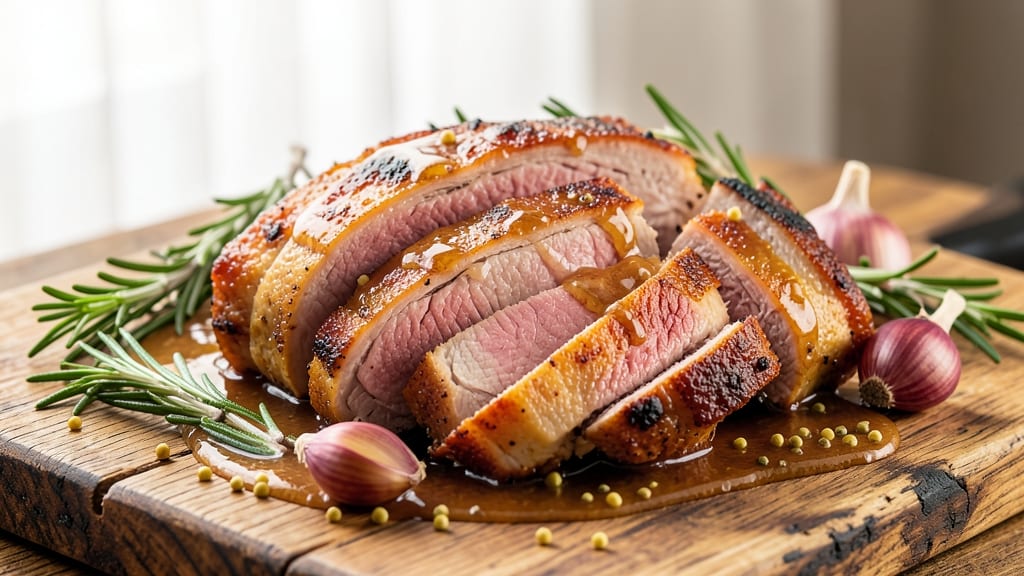
Michael Symon's pork shoulder recipe transforms a simple cut into a showstopper with celery crown crunch and smoky herb gravy. 🔥 My first time cooking this dish at The Smoky Pig, I learned how Symon's technique—slow-roasting until tender, then finishing with crispy celery—elevates pork shoulder into something restaurant-worthy.
The secret lies in patience and precision, not shortcuts.
Symon's method starts with a dry-brine overnight, ensuring juicy meat that falls apart at the touch. A blend of fresh herbs, garlic, and mustard seeds infuses flavor deep into the pork, while the celery crown—browned to golden perfection—adds a satisfying crunch that contrasts beautifully with the tender meat.
The smoky herb gravy ties everything together, rich and aromatic without overpowering.
What makes this recipe special is how it balances simplicity with sophistication. You'll end up with pork shoulder so tender it melts in your mouth, topped with crispy celery that adds texture and visual appeal.
The gravy, made from the pan drippings, is rich and deeply flavorful, perfect for drizzling over every bite.
This dish pairs wonderfully with classic sides like mashed potatoes, apple sauce, or roasted greens, making it ideal for family dinners or holiday feasts. Symon's approach ensures every bite is packed with flavor, proving that pork shoulder can be just as impressive as a steak.
Let's get started on this showstopper.
Ingredients for michael symon pork shoulder
Six ingredients transform pork shoulder into a restaurant-worthy centerpiece with Symon's signature crunch and smoky depth.
| Ingredient | Amount | Notes |
|---|---|---|
| Boneless Pork Shoulder 🥩 | 5 lb | Bone-in preferred for flavor |
| Kosher Salt 🧂 | 2 tbsp | For dry brine overnight |
| Fresh Thyme 🌿 | ½ cup | Stems removed, chopped |
| Fresh Rosemary 🌿 | ¼ cup | Needles only, chopped |
| Garlic Cloves 🧄 | 8 cloves | Smashed, not minced |
| Yellow Mustard Seeds 🌶️ | 1 tbsp | Toasted lightly for depth |
| Extra-Virgin Olive Oil 🫒 | ¼ cup | For herb paste |
| Celery Crowns 🧅 | 4 whole | Large stalks, trimmed |
| Yellow Onion 🧅 | 1 whole | Cut into wedges |
| Carrots 🥕 | 3 whole | Cut into chunks |
| Fresh Sage 🌿 | ¼ cup | Chopped for gravy |
| Beef Broth 💧 | 2 cups | Low-sodium preferred |
| Whole Grain Mustard 🌶️ | 1 tbsp | For gravy richness |
| Flour 🌾 | 1 tbsp | All-purpose, for gravy |
The pork shoulder is non-negotiable here—bone-in delivers richer flavor, but boneless works in a pinch. Look for a cut with good marbling at Whole Foods or your butcher. The celery crowns should be thick and sturdy (the good stuff, not the pre-cut kind). Fresh herbs are a must—Trader Joe's has great bundles, but even the grocery store's plastic containers will do if you use them within a week. Mustard seeds? Toast them in a dry pan for 30 seconds—that's where the depth comes from.
No fresh thyme? Dried at one-third the amount works, but you'll miss the bright aroma. Swap rosemary for oregano if needed (though it changes the flavor profile). For the celery crowns, if you can't find whole ones, substitute thick celery stalks tied together with kitchen twine. The gravy can be made ahead—just reheat with a splash of broth to loosen. The mustard seeds are key; if you skip them, add an extra pinch of black pepper for complexity. And yes, you can use Dijon mustard instead of whole grain if that's what you've got.
Pork shoulder reheats beautifully—350°F for 20 minutes covered with foil. The celery crowns crisp up again when reheated, so save them separately. Gravy keeps for 5 days in the fridge or 3 months frozen. I always make extra gravy—it's perfect for dipping those crispy celery crowns. Store pork in its juices, and the herbs can be prepped a day ahead. The mustard seeds? Keep them in a dark jar so they don't lose their punch.
Why You'll Love This Recipe
- Foolproof Slow Cook: I swear by this—just toss the pork shoulder in with whole garlic cloves, sprigs of rosemary and thyme, and a generous shake of kosher salt. Set it and forget it while you handle the rest of dinner. (Yes, even on a Tuesday night.)
- Herb-Packed Magic: That combo of fresh rosemary and thyme? It’s like a flavor hug for your pork. The garlic cloves caramelize just enough to add depth without overpowering—crispy edges, tender inside, and a scent that’ll make your kitchen smell like a Michelin-starred bistro.
- Leftover Goldmine: This recipe practically begs to be made in bulk. Shred it for tacos, sandwiches, or pasta the next day—it’s that good. Honestly, I make it on Sundays just so I can snack on it all week.
- Budget Meal Upgrade: Pork shoulder is the ultimate wallet-friendly protein, and this method turns it into something restaurant-worthy. Between us, it’s my go-to when I want to feed a crowd without breaking the bank. (Pro tip: Buy it on sale and freeze half.)
Step-by-step instructions for Michael Symon's pork shoulder
Master this slow-cooked pork shoulder with crispy celery crowns and rich herb gravy.
🔥 Step 1: Dry Brine and Prep the Pork Shoulder
Pat the 5 lb boneless pork shoulder completely dry with paper towels—this is critical for crispy skin. Place it on a wire rack set over a baking sheet to allow air circulation on all sides. Sprinkle 2 tbsp kosher salt evenly over the surface, pressing gently to help it adhere. Cover loosely with plastic wrap and refrigerate for 12-24 hours.
Here's the thing—dry brining draws out moisture while seasoning deeply. After brining, the exterior will look dry, but don't worry. When you sear it later, that salt crust will become irresistibly crispy. Remove the pork from the fridge 1 hour before cooking to bring it to room temperature for even cooking.
👨🍳 Step 2: Sear and Build the Herb Paste
Preheat your oven to 325°F. Heat 2 tablespoons of the extra-virgin olive oil (about half of the total) in a Dutch oven over medium-high heat. Once shimmering, add the pork shoulder and sear on all sides until deeply browned—about 8-10 minutes total. This step develops the Maillard reaction, creating that deep, caramelized flavor we want.
While the pork browns, make the herb paste in a small bowl by combining 0.5 cup fresh thyme, 0.25 cup fresh rosemary, 8 smashed garlic cloves, and the remaining 0.25 cup extra-virgin olive oil. Once the pork is browned, remove it from the Dutch oven and set it aside. Add the toasted 1 tbsp yellow mustard seeds to the pot and cook for 30 seconds until fragrant. Pour in the herb paste and stir, scraping up any browned bits from the bottom.
🥘 Step 3: Slow Cook with Vegetables
Add the 4 whole celery crowns, 1 whole yellow onion, and 3 whole carrots to the Dutch oven. Return the pork shoulder to the pot, fat-side up. Pour in 2 cups beef broth until the vegetables are mostly submerged. The liquid should come about halfway up the sides of the pork. Bring to a simmer, then cover tightly with a lid.
Transfer the Dutch oven to the preheated oven and cook for 3-4 hours. Here's where patience pays off—this slow cooking breaks down the connective tissue, transforming tough pork into melt-in-your-mouth perfection. Check the liquid level after 2 hours and add a splash of water if it's reduced too much. The pork is done when it reaches an internal temperature of 195-203°F and the vegetables are fork-tender.
🔥 Step 4: Create the Celery Crown Crunch
Once the pork is cooked, carefully remove it from the pot and transfer to a cutting board. Tent loosely with foil and let it rest for 15-20 minutes. While it rests, increase the oven temperature to 400°F. Remove the celery crowns from the pot and place them on a baking sheet. Brush them lightly with any remaining herb paste and bake for 10-12 minutes until crispy and golden brown. Watch closely—they burn quickly!
Here's the trick: the celery crowns should be crisp enough to stand up to the tender pork. If they're not perfectly crunchy, return them to the oven for another 2-3 minutes. These crispy crowns add a delightful textural contrast to the rich pork and gravy.
🍽️ Step 5: Make the Smoky Herb Gravy
Return the Dutch oven to the stovetop over medium heat. Skim off any excess fat, leaving about 2 tablespoons in the pot. Add 1 tbsp flour and whisk to combine, cooking for 1 minute to remove the raw flour taste. Slowly whisk in 1 cup of the cooking liquid from the pot, then add 1 tbsp whole grain mustard and 0.25 cup fresh sage. Simmer for 5-7 minutes until the gravy thickens to a velvety consistency.
Taste and adjust seasoning with additional kosher salt if needed. The gravy should coat the back of a spoon and have a rich, herby depth. If it's too thick, whisk in a splash more cooking liquid. Serve the pork shoulder sliced thickly, topped with crispy celery crowns and smothered in the smoky herb gravy. Each bite delivers perfect texture contrast and layered flavors.
Pro Tips For Making Michael Symon Pork Shoulder
- SEAR THE GARLIC FIRST: Toss those whole garlic cloves in the dry pan for 30 seconds before adding the pork shoulder—this builds flavor without burning. I used to skip this, and the garlic taste was always muted in the final dish.
- SALT THE THYME STEMS: Crush the thyme stems between your fingers and sprinkle them directly onto the pork with the leaves—more surface area means more flavor. My grandmother swore by this, and it’s the reason the herb notes hit harder.
- DON’T PEEK AT THE PORK: Resist opening the lid after the first hour, even if it smells amazing. Every time I checked, the moisture escaped, and the crust turned soggy. Let it cook undisturbed at 275°F—patience here makes the difference.
- USE A MEAT THERMOMETER: Pull the pork at 195°F, not when it looks "done." I learned this the hard way—once I sliced into a shoulder at 190°F, and it was still tough. The internal temp is the only way to guarantee tender, pull-apart perfection.
Regional styles of this recipe
Southern BBQ Style
In the Southeast, pork shoulder is often cooked low and slow with a dry rub or simple seasoning—just like Michael Symon’s method, but with a smoky twist. I remember my first competition in Atlanta where pitmasters used fruitwood like cherry or hickory to infuse that signature smoky aroma.
For a regional take, swap the oven for a smoker set to 225°F, adding wood chips for 4-5 hours before finishing with the celery crowns in the oven. The result? A deeper smokiness that pairs perfectly with the herb gravy. 🔥
Italian-Inspired Braise
Symon’s technique actually has Italian roots—think of it as a cross between a braised pork shoulder and a rustic Italian roast. In Charleston, I’ve adapted this by adding white wine (about ½ cup dry Pinot Grigio) to the Dutch oven alongside the broth.
Deglaze with the wine after searing, then proceed with the recipe. The acidity brightens the herbs and cuts through the richness. Serve with polenta instead of mashed potatoes for an authentic Italian touch.
Midwest Applewood Twist
Up north, pork shoulder often gets a sweet-and-smoky profile using applewood chips in the smoker or even dried apples> in the braising liquid. For a Midwest-inspired version, add ½ cup chopped dried apples> (like Braeburn) to the Dutch oven during the slow cook.
The apples soften and caramelize, adding natural sweetness that balances the herbs. Top the celery crowns with a sprinkle of crushed cinnamon> before baking for warmth.
Carolina Mustard-Glazed
In South Carolina, we love a tangy kick—this variation swaps the herb paste for a mustard glaze>. Mix ¼ cup whole grain mustard>, 2 tbsp honey>, and 1 tbsp apple cider vinegar>, then brush it over the pork after searing.
Proceed with the slow cook, but baste the pork with extra glaze every 30 minutes>. The celery crowns stay crispy, but now you’ve got a sticky, sweet-tangy glaze that’s pure Carolina comfort.
Texas-Style Smoked and Shredded
For a Texas BBQ> twist, smoke the pork shoulder until it reaches 203°F>, then shred it immediately. Mix the shredded pork with the crispy celery crowns and gravy, then serve on buns with pickles> for a pulled pork sandwich.
This version skips the slicing and leans into the smoky, shredded texture that’s iconic in Texas. Use post oak wood chips> for that signature Texas smoke flavor.
Nutrition facts
Frequently asked questions
Why does Michael Symon's recipe use celery crowns instead of regular celery?
The celery crowns add a dramatic visual element and superior crunch compared to regular celery stalks. Their thick, sturdy structure holds up beautifully when roasted, creating that satisfying contrast against the tender pork. Plus, they look stunning on the plate! Symon's method relies on this crispy texture to elevate the dish from simple braised pork to something restaurant-worthy.
Can I substitute bone-in pork shoulder for boneless?
Bone-in pork shoulder actually works better for flavor, though it may require 10-15 extra minutes of cooking time. The bone adds depth to the broth and helps keep the meat moist. Just be sure to remove any large bones before slicing for serving. If you're using bone-in, aim for 203°F internal temperature for perfect tenderness.
What's the best way to reheat leftover pork shoulder?
For maximum tenderness, reheat in a 350°F oven for 20-25 minutes covered with foil, then crisp the celery crowns separately at 400°F for 5 minutes. Avoid microwaving—the pork will turn rubbery. The gravy reheats beautifully on the stovetop over low heat with a splash of broth. Store leftovers in their juices for 3-4 days.
How do I know when the pork is fully cooked?
The pork is done when it reaches 195-203°F internally and the meat easily pulls apart with two forks. The probe should slide in like butter. For extra accuracy, check the texture of the meat near the bone—it should be fork-tender. If you don't have a meat thermometer, cut into the thickest part; the juices should run clear, not pink.
Can I make the herb paste ahead of time?
Yes! The herb paste keeps well in the fridge for 3 days or freezes for 3 months. Store it in an airtight container with a thin layer of olive oil on top to preserve freshness. When ready to use, just give it a quick stir. The mustard seeds maintain their flavor best when stored in a dark jar away from light.