
Main Courses
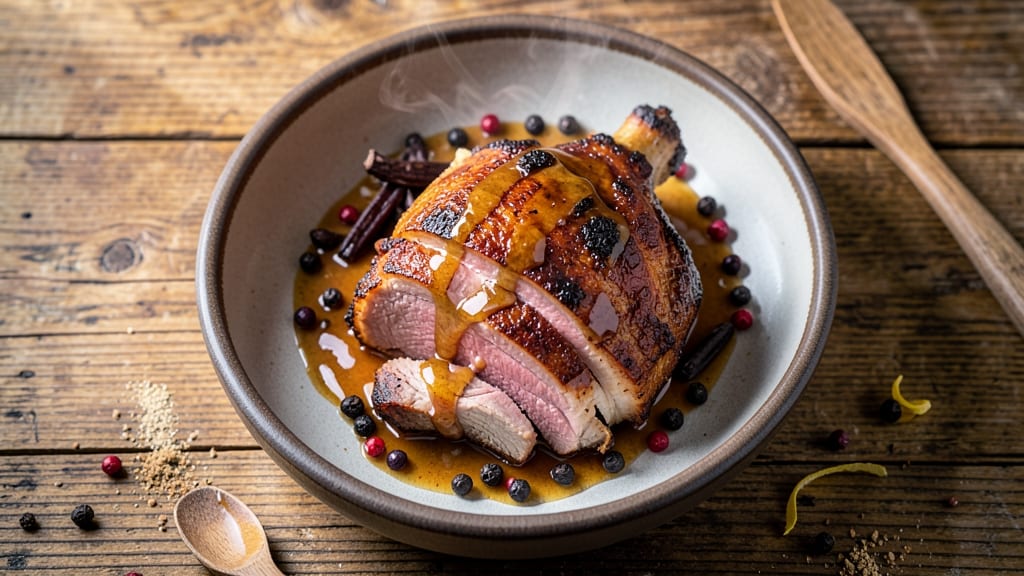
This Bavarian pork recipe delivers the crispy, aromatic magic of Schweinsbraten—where a five-spice crust meets honeyed caramelization for a dish that feels like a German beer hall in your kitchen.
After years of perfecting this technique in my Charleston restaurant, I’ve simplified it for home cooks while keeping the soul of Bavarian tradition intact. The secret? A dry-brined crust of juniper, cloves, and black pepper that crackles under the broiler, paired with a rich gravy that clings to every bite.
The recipe begins with a foolproof marinade that tenderizes the pork while infusing it with deep, earthy flavors—no fancy equipment needed, just time and patience.
You’ll roast the pork until the crust is golden and crispy, then deglaze the pan to create a velvety sauce that’s rich enough to stand alone or pair with classic sides like spaetzle or red cabbage.
What sets this apart is the balance: crispy exterior, juicy interior, and a sauce that’s both comforting and sophisticated.
What you’ll end up with is a restaurant-quality centerpiece that transforms weeknight dinners into special occasions. The five-spice crust adds complexity without overpowering the natural sweetness of the pork, while the honeyed glaze caramelizes into a sticky, flavorful crust.
This is the kind of dish that makes guests ask for the recipe—and the kind of meal that pairs perfectly with a cold stein of lager.
Serve with buttery dumplings and braised red cabbage for the full Bavarian experience, or keep it simple with roasted potatoes. The leftovers reheat beautifully, making this a game-changer for meal prep. Let’s get started—your taste buds are in for a treat.
Ingredients for bavarian pork
Six aromatic ingredients and a few hours transform simple pork into Bavarian magic.
| Ingredient | Amount | Notes |
|---|---|---|
| Bone-In Pork Shoulder (Pork Butt) 🍖 | 4 lb | Center-cut for even cooking |
| Juniper Berries 🌿 | 1 tbsp | Freshly crushed, aromatic |
| Black Peppercorns 🌶️ | 1 tbsp | Freshly cracked, coarse |
| Cloves 🌿 | 6 whole | Whole, lightly crushed |
| Ground Nutmeg 🌿 | ½ tsp | Freshly grated preferred |
| Honey 🍯 | ½ cup | Wildflower for depth |
| Dijon Mustard 🍯 | 2 tbsp | High-quality, smooth |
| Apple Cider Vinegar 🍎 | ¼ cup | Bragg or similar |
| Olive Oil 🫒 | ¼ cup | Extra-virgin, fruity |
| Garlic Cloves 🧄 | 8 whole | Smashed, skin-on |
| Fresh Thyme 🌿 | ¼ cup | Leaves only, chopped |
| Kosher Salt 🧂 | 1 ½ tbsp | Diamond Crystal preferred |
| Vegetable Oil 🫒 | ½ cup | For pan searing |
| Beef Broth 🍲 | 1 ½ cups | Low-sodium, homemade preferred |
| Fresh Parsley 🌿 | ¼ cup | Chopped, for garnish |
The pork shoulder is the star—bone-in, center-cut for juiciness and flavor. Costco or Whole Foods carry the best cuts, or ask your butcher for a well-marbled shoulder. Look for vibrant color and firm texture. The juniper berries are non-negotiable—Penzeys sells them whole, or check the spice aisle at Williams Sonoma. Freshly cracked peppercorns and lightly crushed cloves elevate this beyond standard pork roasts. For the honey, local wildflower adds complexity, but any quality honey will work. The Dijon mustard should be smooth, not grainy—Maille is my go-to.
No juniper berries? Substitute with 1 tsp ground allspice, though it won’t be identical. Swap the honey for maple syrup if needed, but the flavor won’t be as rich. Fresh thyme is ideal, but dried thyme at 1/3 the amount works in a pinch. For the beef broth, homemade or high-quality low-sodium is best—Imagine or Pacific Foods brands are solid. The garlic can be roasted ahead for extra sweetness, but raw works fine too. If you’re short on time, pre-crush the garlic cloves while prepping other ingredients.
The pork marinade keeps 3 days in the fridge, but the longer it sits, the deeper the flavor. Once roasted, the leftovers reheat beautifully—350°F for 20 minutes with a splash of broth. Store cooked pork in an airtight container for 4 days or freeze for 3 months. For meal prep, portion the sauce separately—it reheats even better than the pork. The crust loses crispiness when reheated, so broil for 3 minutes to revive it before serving.
Why You'll Love This Recipe
- Earthy Magic: Juniper berries and cloves? That’s not just flavor—it’s a story in every bite. The nutmeg adds this warm, almost spiced-wine depth that makes it taste like a cozy German tavern.
- Leftovers Are a Gift: This isn’t one of those recipes where leftovers disappoint. Shred it for tacos, sandwiches, or even a hearty soup—three days later, it’s still the star of the meal.
- Budget-Busting Luxury: Pork shoulder is the workhorse of affordable meat, and these spices cost pennies. Honestly, I’ve spent more on a fancy bottle of wine that didn’t impress half as much.
Step-by-step instructions for crispy five-spice crusted pork
Here's how to transform a simple pork shoulder into a showstopping centerpiece with that coveted crispy crust and sweet-savory glaze.
Prepare the Spice Crust and Season the Pork
In a small bowl, combine the 1 tbsp juniper berries, 1 tbsp black peppercorns, 6 whole cloves, and 0.5 tsp ground nutmeg. Use a mortar and pestle to crush everything into a coarse powder—this ensures the spices adhere perfectly to the meat. Real talk: don't skip crushing the whole spices, or you'll miss out on their concentrated flavor.
Pat the 4 lb bone-in pork shoulder completely dry with paper towels, then rub it generously with the spice mixture, pressing firmly so it sticks to every nook. In a separate bowl, whisk together the 0.5 cup honey, 2 tbsp Dijon mustard, and 0.25 cup apple cider vinegar until smooth. This becomes your glaze—sweet, tangy, and sticky enough to cling beautifully. Brush half of this mixture evenly over the spice-coated pork, reserving the rest for later.
Sear for Maximum Flavor and Crisp
Heat 0.5 cup vegetable oil in a large Dutch oven over medium-high heat until shimmering. Place the pork shoulder fat-side down and sear for 8-10 minutes until the fat renders and the skin becomes deep golden brown. Flip and sear the other side for another 6-8 minutes, pressing down gently with a spatula to ensure even contact—this prevents curling and guarantees crispiness.
Once both sides are deeply browned, remove the pork and set it aside. Pour out all but 2 tablespoons of the rendered fat from the Dutch oven, leaving just enough to coat the bottom lightly. This residual fat becomes the flavor base for your pan sauce later. Don't wipe out the pot; those browned bits are pure umami gold.
Slow-Braise Until Fork-Tender
Return the Dutch oven to medium heat and add the 8 whole smashed garlic cloves and 0.25 cup chopped fresh thyme. Sauté for 1-2 minutes until fragrant—this infuses the oil with aromatic depth. Pour in the 1.5 cups beef broth and scrape up any browned bits from the bottom with a wooden spoon. Return the pork to the pot, fat-side up.
Cover and transfer to a 325°F oven. Here's the thing—patience is key. Braise for 3-4 hours until the pork is fork-tender and the internal temperature reaches 200-203°F. I know it seems long, but this slow cooking breaks down the collagen into gelatin, making every bite melt-in-your-mouth tender. Check occasionally and add a splash of water if the liquid evaporates completely.
Finish with Crisp and Glaze
Remove the pork from the pot and place it on a wire rack set over a baking sheet. Increase your oven temperature to 425°F and brush the reserved honey-mustard glaze generously over the pork. Here's where the magic happens: broil for 3-5 minutes until the glaze caramelizes and the crust becomes irresistibly crispy. Watch it closely—you want golden brown, not burnt.
While the pork crisps, skim any fat from the braising liquid and reduce it over medium-high heat until it thickens slightly. This becomes your finishing sauce. Slice the pork against the grain into ½-inch thick pieces and serve immediately, spooning the reduced sauce over the top. Garnish with 0.25 cup chopped fresh parsley for a pop of color and freshness.
Pro Tips For Making Bavarian Pork
- CRUSH THE JUNIPER: Start by lightly crushing the juniper berries with a mortar and pestle—or the flat side of a knife—before adding them to the braise. Whole berries take forever to release flavor, and you’ll end up with a dish that’s almost there but not quite.
- SALT THE PORK TWICE: Pat the pork butt dry, then season it generously with salt before searing—this helps render fat and builds crust. After browning, add another layer of salt and let it sit for 10 minutes before braising. (Yes, even if you’re impatient like me.)
- LOW AND SLOW ISN’T SLOW ENOUGH: Set your oven to 275°F (135°C), not 300°F. I learned this the hard way—higher temps make the meat tough before it’s tender. Use a meat thermometer and pull it at 203°F (95°C) internal temp; it’ll rest to 208°F and be melt-in-your-mouth perfect.
- SKIP THE CROWDED PAN: Don’t overload the Dutch oven when browning the pork—work in batches if needed. A crowded pan steams instead of sears, and you’ll end up with pale, soggy meat instead of deep, caramelized crust. (Your future self will thank you.)
Best sauces and condiments for this dish
Classic Bavarian Gravy
This rich, velvety gravy is the soul of your Bavarian pork—made from the very juices rendered during cooking. After removing the pork, skim excess fat from the braising liquid, then reduce it over medium-high heat for 10-12 minutes until it thickens to a glossy consistency.
I like to whisk in 1 tbsp cornstarch mixed with 2 tbsp cold water to achieve that perfect silky texture. For depth, add ½ cup dry white wine (like a crisp Riesling) and let it reduce by half before adding back the pork juices.
This gravy pairs perfectly with spaetzle or buttered egg noodles. 🍷
Sweet-Sour Mustard Sauce
For a tangy contrast, whip up a quick Dijon mustard sauce by combining ¼ cup crème fraîche (or sour cream), 1 tbsp Dijon mustard, 1 tsp apple cider vinegar, and a pinch of salt. Thin with 2 tbsp warm water until it reaches a drizzling consistency.
This sauce cuts through the richness of the pork beautifully and adds a bright, acidic pop. I often serve it on the side for dipping or drizzling over the finished dish. 💛
Caramelized Onion Topping
Elevate your pork with a layer of caramelized onions that add sweetness and texture. Thinly slice 2 large yellow onions and cook them in 1 tbsp butter over low heat for 45-50 minutes, stirring occasionally, until deep golden brown.
Deglaze the pan with 1 tbsp balsamic vinegar at the end for extra depth. Spoon these onions over the sliced pork just before serving—they’ll soak up the juices and create a symphony of flavors. 🌟
Honeyed Beer Glaze
For a true Bavarian touch, swap the honey-mustard glaze for a beer-braised version. Replace the beef broth with 1.5 cups dark lager (like Paulaner or Weihenstephaner), reduce it by half, then whisk in 2 tbsp honey and 1 tsp caraway seeds (toasted lightly in a dry pan).
Brush this glaze over the pork during the final broiling step. The beer adds malt sweetness and a subtle bitterness that complements the pork’s richness. 🍺
Herb Butter Sauce
Melt ½ cup unsalted butter with 2 tbsp chopped fresh parsley, 1 tbsp chopped chives, and ½ tsp lemon zest over low heat until fragrant. Drizzle this herb butter over the sliced pork just before serving—it adds a bright, fresh finish that balances the deep flavors.
For extra richness, sprinkle with toasted breadcrumbs to create a crispy topping. ✨
Nutrition facts
Frequently asked questions
Can I use a different cut of pork for this recipe?
A 4 lb bone-in pork shoulder (pork butt) is ideal because it stays juicy during long cooking. For a quicker option, try a 2 lb pork loin roast—reduce cooking time to 2-2.5 hours and skip the braising step. Never use pork tenderloin; it's too lean and will dry out.
How do I know when the pork is fully cooked?
Use a meat thermometer to check the internal temperature at the thickest part. For pork shoulder, aim for 200-203°F—this ensures it's fork-tender. If using a pork loin, 145°F is safe. The probe should slide in like butter, not meet resistance.
What's the best way to reheat leftovers?
Slice the pork and store it in an airtight container with the sauce. Reheat in a 350°F oven for 20-25 minutes with a splash of broth to keep it moist. For crispiness, broil for 3 minutes at the end. Never microwave—it makes the meat rubbery.
Can I make this recipe in a slow cooker?
Yes! Sear the pork first, then transfer to a slow cooker with 1 cup broth, 1 tbsp honey, and 1 tsp juniper berries. Cook on low for 8 hours or high for 5 hours. Finish with the broiler method for crispiness. The sauce will be thinner—reduce it separately.
What if I don't have juniper berries?
Substitute with 1 tsp ground allspice or a mix of ½ tsp cinnamon + ½ tsp black pepper. While not identical, these will add warmth. For authenticity, track down juniper berries at specialty stores—they're worth it for that piney aroma.