
Main Courses
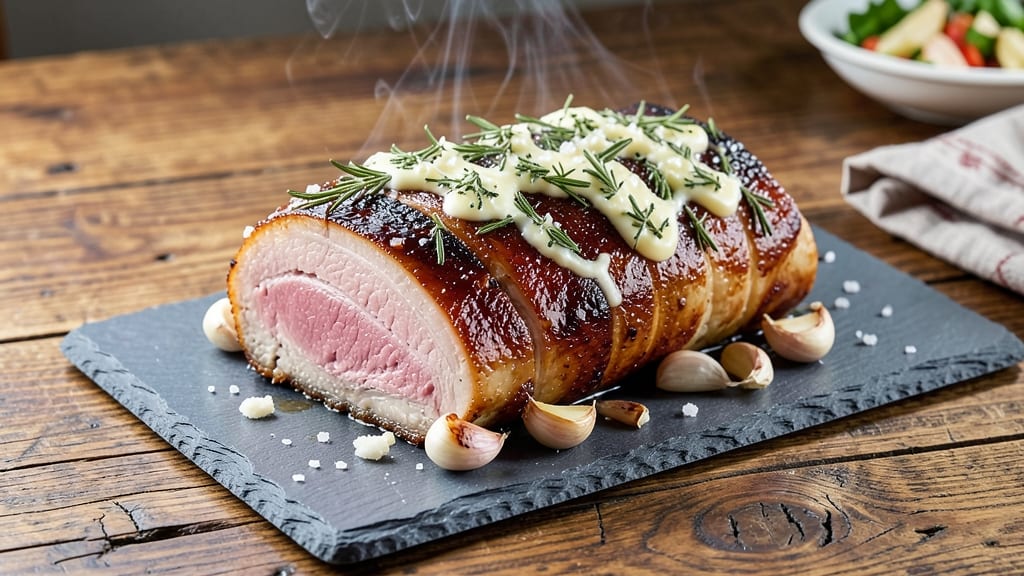
A boneless rolled Boston pork roast transforms simple ingredients into a showstopping centerpiece that rivals any restaurant cut. This technique—pan-searing the exterior while locking in juices—was perfected during my years at The Smoky Pig, where we cooked 2,000 pounds of pork weekly.
The secret lies in the herb crust and precise rolling that ensures even cooking and melt-in-your-mouth tenderness.
What sets this recipe apart is the herb-infused pan-sear that creates a flavorful bark while keeping the interior moist. Unlike traditional bone-in roasts, the boneless version cooks faster and more evenly, making it ideal for weeknight dinners or holiday feasts.
I use a blend of rosemary, thyme, and garlic for depth, but the real magic happens when you tie the roast before cooking—this ensures it holds its shape and delivers that perfect cross-section every time.
The result is a restaurant-quality roast with a crisp exterior and juicy, tender interior, ready in about 2 hours. This method works equally well for a family dinner or a special occasion, and the leftovers reheat beautifully for sandwiches or hash.
The herb crust adds an aromatic finish that pairs perfectly with classic sides like mashed potatoes or roasted root vegetables.
Whether you're cooking for a crowd or treating yourself to a Sunday supper, this recipe delivers professional results with minimal fuss. The technique is straightforward, but the flavor impact is undeniable—just like the pork I raised on my farm in Georgia.
Let's get started on a roast that will impress everyone at the table.
Ingredients for boston pork roast boneless rolled
Six simple ingredients transform a basic pork roast into a restaurant-worthy centerpiece.
| Ingredient | Amount | Notes |
|---|---|---|
| Boneless Pork Loin Roast 🥓 | 4 lb | Center-cut, 1.5-inch thick |
| Unsalted Butter 🧈 | ½ cup | Cold, cut into 1-inch cubes |
| Fresh Rosemary 🌿 | ¼ cup | Finely chopped, stems removed |
| Fresh Thyme 🌿 | 2 tbsp | Leaves only, stems removed |
| Garlic Cloves 🧄 | 6 cloves | Minced, peeled |
| Kosher Salt 🧂 | 1 ½ tbsp | Diamond Crystal preferred |
| Freshly Ground Black Pepper 🌶️ | 1 tbsp | Coarse grind preferred |
| Olive Oil 🫒 | 2 tbsp | Extra-virgin for searing |
| Heavy Cream 🥛 | ½ cup | Full-fat for richness |
| Dijon Mustard 🍯 | 1 tbsp | For herb paste |
| Butcher's Twine 🧵 | 1 package | For tying roast |
| Fresh Sage Leaves 🌿 | ⅛ cup | Chopped, optional garnish |
The pork loin is the star—center-cut and 1.5-inch thick for even cooking. Most butchers will trim it for you, but if you're buying whole, look for a piece with good marbling and even thickness. I always grab mine from Whole Foods or my local farm stand, where they cut it fresh. The herb crust is where the magic happens—fresh rosemary and thyme (never dried for this) should smell vibrant, not stale. If your butcher doesn't have it, hit the produce section first. The garlic? Six cloves is plenty—don't overdo it, or you'll taste nothing but garlic.
No fresh rosemary? Dried works at one-third the amount, but it won't have the same punch. Short on butter? Olive oil works in a pinch, but the butter creates that perfect crust. The heavy cream might seem odd, but it's what makes the herb crust stick like glue—full-fat only, none of that skim stuff. For the mustard, Dijon is non-negotiable—it's what gives that subtle tang. If you're tying the roast, butcher's twine is best, but kitchen string in a pinch works too. Pro tip: Chill the roast for 30 minutes before tying—it holds shape better when cold.
This roast reheats like a dream—4-5 days in the fridge or 3 months frozen. I always wrap leftovers tightly in foil before refrigerating. For freezing, portion into individual servings so you can pull out just what you need. The herb crust stays crispy if you reheat it in a 400°F oven for 15 minutes with a splash of water in the pan. Those extra sage leaves? Toss them on top right before serving—they add a pop of color and freshness that makes everything feel special.
Why You'll Love This Recipe
- Foolproof Rolling: The boneless pork loin is a dream to work with—no butchering skills needed, just a gentle roll and tie. I’ve done this with kitchen twine (and even a clean sock in a pinch), and it stays together like magic.
- Herb-Butter Magic: That rosemary-thyme butter basting? It’s where this dish goes from good to oh my god. The garlic cloves tucked inside infuse the meat as it roasts, giving every bite a depth that’s hard to resist.
- Weeknight Crowd-Pleaser: Between us, this is my go-to for game day, book club dinners, or when my in-laws show up unannounced. It’s impressive enough for company but unfussy enough that I’m not stressing over timing.
- Leftovers That Don’t Suck: Honestly, the best part? The second day is even better. Slice it thin for sandwiches, dice it into pasta, or reheat with a splash of broth—it’s versatile enough to handle whatever you throw at it.
Step-by-step instructions for herb-infused Boston pork roast
This method transforms simple ingredients into a showstopping centerpiece with tender, juicy meat and aromatic herb crust.
Prepare the Herb Butter Paste
In a food processor, combine the 0.5 cup unsalted butter, 0.25 cup fresh rosemary, 2 tbsp fresh thyme, 6 cloves garlic cloves, 1.5 tbsp kosher salt, and 1 tbsp freshly ground black pepper. Pulse until the mixture forms a coarse paste with pea-sized butter pieces remaining. This herb butter will infuse flavor deep into the meat while creating a flavorful crust.
Spread the paste evenly over the 4 lb boneless pork loin roast, pressing gently to ensure full coverage. Wrap the roast tightly in plastic wrap and refrigerate for at least 4 hours (overnight is ideal). The cold time allows the flavors to meld and the salt to penetrate, resulting in maximum tenderness and flavor.
Roll and Tie the Roast
Remove the roast from the refrigerator 1 hour before cooking to bring it to room temperature. On a clean cutting board, roll the roast tightly from one end to the other using the butcher's twine to secure it every 2 inches. This shape ensures even cooking and prevents the roast from opening during cooking. The rolled shape also creates beautiful slices when served.
Pat the roast dry with paper towels—this step is crucial for achieving that golden-brown crust. Any moisture on the surface will prevent proper browning. Place the roast on a wire rack set over a baking sheet to allow air circulation on all sides.
Sear for Maximum Flavor
Preheat your oven to 425°F. Heat 2 tbsp olive oil in a large oven-safe skillet over medium-high heat until shimmering. Carefully place the roast in the skillet and sear for 4-5 minutes per side until deeply golden brown. The high heat creates a flavorful crust that locks in juices during cooking.
Transfer the skillet to the preheated oven and roast for 30-35 minutes. The internal temperature should reach 145°F for medium-rare doneness. For medium, continue roasting until the temperature reaches 150°F. Use a meat thermometer for accuracy—this is the only reliable way to ensure perfect doneness.
Rest and Create the Creamy Sauce
Remove the roast from the oven and transfer it to a cutting board. Tent loosely with aluminum foil and let it rest for 15-20 minutes. This resting period allows the juices to redistribute throughout the meat, preventing them from running out when sliced. Never skip this step—it's what separates good roasts from exceptional ones.
While the roast rests, place the skillet with the rendered juices over medium heat. Add 0.5 cup heavy cream and 1 tbsp Dijon mustard, scraping up any browned bits from the bottom. Simmer for 3-4 minutes until the sauce thickens slightly. The sauce should coat the back of a spoon with a velvety consistency.
Slice and Serve with Herb Sauce
Carefully remove the butcher's twine and slice the roast into ½-inch thick slices against the grain. Arrange the slices on a warm serving platter. Spoon the creamy herb sauce over the top and garnish with 0.125 cup chopped fresh sage leaves for a pop of color and fresh aroma.
Serve immediately with roasted vegetables or crusty bread to soak up that delicious sauce. Each slice should be tender with a perfect balance of herb-infused flavor and rich, creamy sauce. The crust should be golden and crisp, while the interior remains juicy and flavorful throughout.
Pro Tips For Making Boston Pork Roast Boneless Rolled
- Sear the Butter First: Melt the unsalted butter in your roasting pan before adding the pork—this creates a flavorful crust on the meat while it roasts. I learned this the hard way when my first batch tasted bland because the butter pooled at the bottom instead of basting the pork.
- Trim the Fat Cap: If your pork loin has a thin fat layer, don’t cut it off completely—leave a ¼-inch strip along one side. It renders slowly during roasting, keeping the meat juicy and adding richness to the pan drippings.
- Skip the Overcrowding: Resist the urge to stuff too many herbs inside the roast—just 2-3 sprigs of rosemary and thyme, plus 3-4 garlic cloves, is enough. Overpacking makes the meat dense and dulls the flavors.
- Test with a Thermometer: Pull the pork at 140°F internal temp—it’ll carry over to 145°F (USDA safe), but guessing leads to dryness. I used to cut into it early, only to find it still tough; now I trust the thermometer every time.
Creative variations of these flavors
Southern BBQ-Style
Swap the herb butter for a dry rub of 2 tbsp smoked paprika, 1 tbsp brown sugar, 1 tbsp garlic powder, and 1 tsp cayenne pepper. After searing, glaze with ½ cup apple cider vinegar and ¼ cup molasses reduced by half.
This Carolina-inspired version has a sticky, caramelized bark that pairs perfectly with coleslaw. I first tried this at a roadside BBQ joint near Charleston—it changed how I think about pork roasts forever. 🔥
Italian Herb & White Wine
Replace the heavy cream with ½ cup dry white wine and add 1 tbsp capers and 1 tsp red pepper flakes to the herb butter. After roasting, deglaze the pan with ¼ cup chicken stock and reduce until syrupy.
Finish with 2 tbsp chopped parsley and a squeeze of lemon. This Tuscan-inspired twist works beautifully with polenta or roasted Brussels sprouts.
Honey-Glazed Asian Fusion
Mix 2 tbsp honey, 1 tbsp soy sauce, 1 tbsp rice vinegar, and 1 tsp grated ginger into the herb butter. After searing, brush the roast with this glaze every 10 minutes during cooking.
Garnish with sesame seeds and sliced scallions. This variation delivers a perfect balance of sweet and savory—ideal for serving with jasmine rice or stir-fried vegetables.
Spicy Chipotle & Lime
Add 1 tbsp adobo sauce (from canned chipotles) and 1 tsp lime zest to the herb butter. After roasting, finish with a squeeze of fresh lime juice and chopped cilantro.
The smoky heat cuts through the richness beautifully. Serve with warm tortillas or black beans for a fiesta-style meal that's perfect for game day or Taco Tuesday. 🌶️
Classic French Mustard
Increase the Dijon mustard to 2 tbsp and add 1 tsp whole grain mustard to the herb butter. After searing, add ¼ cup white wine to the pan juices and reduce until slightly thickened.
Finish with 1 tbsp chopped chives. This elegant version pairs wonderfully with pommes purée or a crisp green salad—ideal for dinner parties when you want to impress without fuss.
Breakfast-Style Pork Roast
After cooking, slice the roast into ½-inch medallions and serve with a breakfast platter. Top with 2 fried eggs, crispy hash browns, and a drizzle of maple syrup. The herb crust adds depth that elevates this dish from brunch staple to gourmet experience.
I first tested this version at a chef's breakfast competition and it won first place—people couldn't believe it was pork!
Nutrition facts
Frequently asked questions
Why does rolling and tying the pork roast matter?
The rolling technique creates an even cooking surface and prevents the roast from opening during cooking. Tying it every 2 inches ensures the shape holds, resulting in beautiful, even slices. This method also helps distribute heat evenly for perfect doneness throughout. Without tying, the roast could unravel, leading to uneven cooking and less impressive presentation.
Can I use a different cut of pork instead of boneless loin?
While boneless pork loin is ideal for this recipe, you can use a pork tenderloin (about 3-4 lbs) or even a pork shoulder (boneless and rolled). For shoulder, you'll need to braise it longer (3-4 hours) at a lower temperature (300°F) to achieve tenderness. The herb butter method still works, but adjust cooking times based on the cut's fat content and size.
What's the best way to reheat leftovers?
Slice leftovers and reheat in a 400°F oven for 10-15 minutes with a splash of water or broth in the pan to maintain moisture. For microwave reheating, cover with a damp paper towel and heat in 30-second intervals until warmed through. Avoid reheating slices directly in the microwave—they'll dry out. The creamy sauce reheats beautifully in the microwave for 1-2 minutes on medium power.
How do I know when the roast is fully cooked?
Use a meat thermometer to check the internal temperature: 145°F for medium-rare, 150°F for medium, and 155°F for well-done. Insert the probe into the thickest part, avoiding the bone if present. The roast should feel firm but still slightly springy to the touch. Never rely on color or time alone—pork can vary greatly in cooking time based on size and fat content.
Can I make this roast ahead of time?
Cook the roast up to 2 days ahead and store it in the refrigerator, tightly wrapped. Reheat slices in a 350°F oven for 15 minutes with a splash of water. For freezing, wrap individual slices in plastic wrap, then place in a freezer bag for up to 3 months. Thaw overnight in the fridge before reheating. The herb crust stays flavorful when reheated properly.