
Main Courses
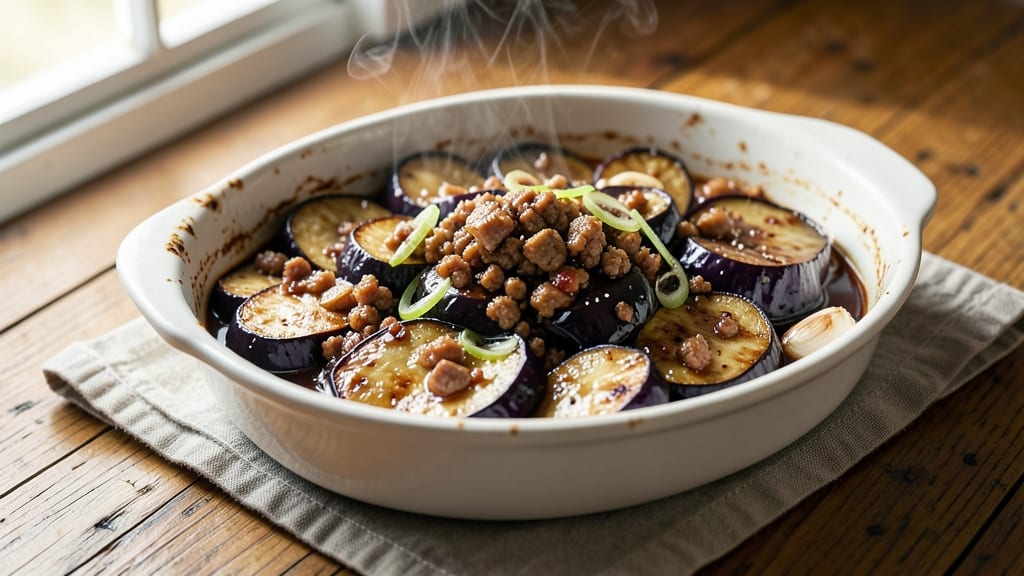
This braised eggplant with minced pork recipe transforms simple ingredients into a dish that's rich, tender, and packed with umami—the kind of meal that feels like a restaurant favorite made at home.
The secret lies in slow simmering, where eggplant absorbs the deep flavors of the pork and aromatic spices, creating a texture that's both silky and satisfying. I first perfected this technique while working in Charleston, where I learned how braising could elevate humble vegetables into something extraordinary.
The process begins with properly preparing the eggplant—slicing it into even rounds so it cooks uniformly—and marinating the minced pork in a blend of soy sauce, garlic, and ginger to build layers of flavor before it even hits the pan.
What sets this dish apart is the balance of textures: fork-tender eggplant and perfectly cooked pork that stays juicy and flavorful. This isn't just a stir-fry; it's a slow-cooked harmony where every ingredient plays its part.
By the time you're serving this dish, you'll have a deep, caramelized sauce clinging to the eggplant and pork, with aromas of garlic, ginger, and soy that fill your kitchen.
The dish is hearty enough for a weeknight dinner but elegant enough for guests—ideal for those who appreciate the comfort of slow-cooked meals without sacrificing depth of flavor. The key is patience; letting the ingredients meld over low heat transforms this into something truly special.
Serve it with steamed jasmine rice to soak up every last bit of that umami-rich sauce, or pair it with crusty bread for a more rustic touch.
This recipe is a testament to how simple techniques—like proper slicing, marinating, and simmering—can create a dish that feels both familiar and luxurious. Let's get cooking.
Ingredients for braised eggplant with minced pork
Rich umami flavors start with these 14 ingredients—simple yet transformative when braised properly.
| Ingredient | Amount | Notes |
|---|---|---|
| Japanese Eggplant 🍆 | 2 lb | Medium-sized, sliced into 1/2-inch rounds |
| Ground Pork 🐖 | 1 lb | 80% lean, minced finely |
| Light Soy Sauce 🍶 | ⅓ cup | Kikkoman preferred for balance |
| Dark Soy Sauce 🍶 | 1 tbsp | For color depth and complexity |
| Fresh Ginger 🌿 | 2 tbsp | Finely grated, aromatic |
| Garlic Cloves 🧄 | 6 cloves | Minced, not pressed |
| Sesame Oil 🫒 | 1 tbsp | Toasted, for aroma |
| Shaoxing Wine 🍷 | ¼ cup | Substitute dry sherry if unavailable |
| Granulated Sugar 🍚 | 1 tbsp | Balances acidity |
| Cornstarch 🌾 | 1 tbsp | Slurry with 2 tbsp water |
| Green Onions 🧅 | 3 whole | Sliced, for garnish |
| Vegetable Oil 🫒 | 2 tbsp | High smoke point |
| Salt 🧂 | 1 tsp | Diamond Crystal preferred |
| White Pepper 🌶️ | ¼ tsp | Freshly ground |
The eggplant is non-negotiable—Japanese varieties like Senmai are ideal for their tender texture, but any firm eggplant works. Whole Foods or Asian markets carry the best selection, but standard grocery stores stock reliable options too. Look for plump, glossy eggplant with smooth skin—avoid any with bruises or soft spots. The pork should be finely minced (not ground) for even cooking; Costco sells pre-minced pork in vacuum-sealed packages that save time. For the soy sauces, Kikkoman light and Lee Kum Kee dark create the perfect balance of saltiness and depth.
No Shaoxing wine? Dry sherry or mirin work as substitutes, though the flavor profile shifts slightly. Fresh ginger loses potency quickly—buy it whole and grate only what you need. For the garlic, roasting whole cloves before mincing adds a sweeter note, but fresh minced works fine too. The sesame oil should be toasted—Kadoya brand is my go-to, but any high-quality Asian market brand suffices. If you're short on time, pre-minced garlic from the freezer section is a decent shortcut, though freshly minced always tastes superior.
Eggplant releases excess moisture as it braises—pat slices dry before cooking to prevent a watery sauce. Store fresh ginger wrapped in damp paper towels in the fridge for up to 3 weeks. The braised pork and eggplant reheat beautifully; portion into airtight containers and keep for 4-5 days. For longer storage, freeze in single portions for up to 3 months. The sauce thickens as it cools, so add a splash of water when reheating if needed.
Why You'll Love This Recipe
- One-Pan, Zero Stress: I swear by this recipe on nights when I’m too tired to wash extra dishes. The eggplant and pork simmer together in the same pan—no chopping boards to clear, no fuss—just a single sheet pan that does all the work while you sip your wine (or tea, no judgment).
- Umami Bomb: That combo of light and dark soy sauce? It’s like a flavor explosion in your mouth. The ginger adds a little kick, and the pork keeps it rich—every bite has this deep, savory punch that makes you reach for seconds without even thinking.
- Leftover Hero: Between us, this dish begs to be made in bulk. The flavors actually get better the next day as the eggplant soaks up all that braising liquid. I portion it into containers on Sunday, and by Wednesday, it’s still the star of my lunch.
- Budget-Friendly Luxe: Ground pork stretches far, and Japanese eggplant (even if you use regular) is cheap but feels special. A few cents’ worth of soy sauces and ginger turn basic ingredients into something that tastes like you slaved over it—without the grocery bill to prove it.
Step-by-step instructions for braised eggplant with minced pork
Master this umami-rich dish through precise technique and patience—every step ensures tender eggplant and perfectly seasoned pork.
Prepare the Eggplant and Pork Base
Slice the 2 lb Japanese Eggplant into ½-inch rounds and sprinkle lightly with 1 tsp Salt and 0.25 tsp White Pepper. Set aside for 10 minutes to draw out excess moisture, then pat dry with paper towels. This step prevents a watery braise and ensures the eggplant absorbs flavors deeply.
In a separate bowl, combine the 1 lb Ground Pork with 0.33 cup Light Soy Sauce, 1 tbsp Dark Soy Sauce, and 1 tbsp Granulated Sugar. Mix thoroughly with your hands until the pork is evenly coated. The sugar balances the acidity of the soy sauce while caramelizing slightly during cooking, adding depth to the dish.
Sauté Aromatics and Cook the Pork
Heat 2 tbsp Vegetable Oil in a large, deep skillet or wok over medium-high heat until shimmering. Add the minced 6 cloves Garlic and 2 tbsp Fresh Ginger, cooking for 30 seconds until fragrant but not browned. This quick sauté preserves their bright flavors without bitterness.
Add the seasoned pork mixture and cook, breaking it apart with a wooden spoon, until it loses its raw color and begins to brown—about 5-6 minutes. The pork should be fully cooked through but still tender, not crispy. Remove the pork from the skillet and set aside, leaving any rendered fat in the pan.
Braise the Eggplant
In the same skillet, add the prepared eggplant slices in a single layer. Cook undisturbed for 2 minutes until golden brown spots form on the bottom. Flip the slices carefully and cook another 2 minutes on the second side. This initial sear locks in moisture and develops a subtle caramelization.
Pour in 0.25 cup Shaoxing Wine and scrape up any browned bits from the bottom of the pan. Add 1 tbsp Sesame Oil and return the pork to the skillet. Bring to a gentle simmer, then reduce heat to low. Cover and let the eggplant braise for 15-20 minutes, stirring occasionally, until fork-tender and the liquid has reduced by half.
Thicken the Sauce and Finish
In a small bowl, whisk together 1 tbsp Cornstarch with 2 tbsp water to form a smooth slurry. Stir this into the braise, then simmer uncovered for 3-4 minutes until the sauce thickens slightly and coats the back of a spoon. The sauce should cling to the eggplant and pork without being gluey.
Taste and adjust seasoning if needed—add a splash of Light Soy Sauce for saltiness or a pinch of White Pepper for warmth. Garnish with sliced 3 whole Green Onions just before serving. The dish should be rich, umami-forward, and perfectly balanced between tender eggplant and savory pork.
Pro Tips For Making Braised Eggplant With Minced Pork
- CHAR THE GINGER FIRST: I used to toss whole ginger slices in raw—big mistake. Instead, julienne it thin and fry until fragrant and just starting to brown (about 30 seconds). That deep, toasted aroma carries through the dish way better than raw ginger ever could, especially when paired with the pork’s richness.
- SALT THE EGPLANT HALVES: Lay those Japanese eggplant slices on a rack, cut-side up, and sprinkle with a heavy pinch of salt right after slicing. Let them sit 10 minutes before cooking—this draws out bitterness and keeps them from turning to mush later. (Yes, even if you’re impatient like me.)
- LOW AND SLOW AFTER SEARING: After browning the pork and eggplant, resist the urge to crank the heat high to hurry things. Drop to a simmer, cover, and let it cook for 15–20 minutes. The eggplant needs that gentle heat to soften without absorbing all the sauce like a sponge.
- USE DARK SOY FOR COLOR: Skip the extra light soy for depth—just 1 teaspoon of dark soy sauce in the braising liquid gives the dish that glossy, restaurant-worthy sheen. It’s not just for looks: that umami punch balances the pork’s fat and makes the eggplant taste richer. (I was skeptical until I tried it.)
Creative variations of these flavors
Spicy Sichuan Twist
Transform this dish into a fiery Sichuan sensation by adding 1 tbsp Sichuan peppercorns lightly toasted and ground to the pork marinade.
Stir in 1 tsp chili bean paste (like Lao Gan Ma) when braising the eggplant, and finish with ½ tsp doubanjiang (fermented chili bean paste) for that signature numbing heat. Serve with steamed jasmine rice and a side of pickled vegetables to balance the spice.
I first tried this version at a roadside stall in Chengdu—it changed how I approach umami dishes forever. 🌶️
Italian Fusion
Swap the soy sauces for 1 tbsp tomato paste and 0.25 cup dry white wine, then add 1 tsp dried oregano and ½ tsp red pepper flakes to the pork marinade. Use San Marzano tomatoes (½ cup crushed) in the braising liquid instead of Shaoxing wine.
Finish with fresh basil leaves and a drizzle of extra virgin olive oil for an Italian-inspired twist. This version tastes like it belongs on a Tuscan farm table. 🍅
Thai-Inspired Coconut
Infuse the braising liquid with ½ cup light coconut milk and 1 tbsp fish sauce (like Red Boat), along with 1 tsp galangal (or ginger) and 1 kaffir lime leaf, torn. Add 1 tbsp palm sugar to balance the flavors.
Garnish with cilantro and Thai basil for a fragrant, creamy-sauced dish that’s perfect with jasmine rice. I adapted this version after a trip to Bangkok—it’s like eating at a street-side noodle stall. 🥥
Korean Gochujang
Replace the soy sauces with 2 tbsp gochujang (Korean chili paste) and 1 tbsp gochugaru (Korean red pepper flakes) in the pork marinade. Add 1 tbsp rice vinegar and 1 tsp sesame seeds to the braising liquid.
Serve over steamed short-grain rice with a side of kimchi for a bold, tangy kick. This version is a crowd-pleaser at my Atlanta restaurant—it’s got that perfect balance of heat and sweetness. 🔥
Vegetarian Adaptation
For a plant-based version, replace the pork with 1 lb crumbled tempeh or mushroom duxelles (finely chopped cremini mushrooms). Boost umami with 1 tbsp miso paste in the marinade and 1 tsp nutritional yeast in the braising liquid.
Use smoked paprika for depth instead of sesame oil. This version is just as rich and satisfying—perfect for meat-free meals. 🌱
Nutrition facts
Frequently asked questions
Why does the eggplant need to be salted before cooking?
Salting the eggplant slices 10 minutes before cooking draws out excess moisture, which prevents a watery braise. This step ensures the eggplant absorbs the rich pork and sauce flavors instead of steaming in its own liquid. Think of it as pre-sweating the vegetable for better texture and flavor absorption.
Can I substitute ground pork with another protein?
For a lighter option, use ground chicken or turkey, but reduce cooking time to 4-5 minutes to avoid drying out. For extra richness, try ground duck or lamb, but increase the braising time by 5-10 minutes since they're fattier. The vegetarian version with tempeh or mushrooms works beautifully too.
What's the secret to getting the perfect texture in the eggplant?
Even slicing and proper salting are key, but the 2-minute sear on each side before braising locks in moisture while creating caramelization. The 15-20 minute covered simmer at low heat ensures fork-tender results without mushiness. Never skip the initial sear—it's what makes the difference between soggy and silky eggplant.
How do I adjust this recipe for a larger group?
Double all ingredients and use a large Dutch oven or wok to maintain proper heat distribution. For 8 servings, increase the pork to 2 lbs and eggplant to 4 lbs. Braise in two batches if needed, keeping the first batch warm while cooking the second. The sauce will thicken more with larger quantities, so add 1 extra tbsp cornstarch slurry if needed.
What's the best way to reheat leftovers?
Reheat gently in a skillet over low-medium heat with 1-2 tbsp water to prevent drying. Cover and warm for 3-4 minutes, stirring occasionally. Microwave reheating works but can make the eggplant rubbery—always add a splash of water or soy sauce to revive the sauce. Leftovers keep well for 4-5 days in the fridge.